
Table of Contents
- What Makes Marble Bathroom Tiles Special
- The Real Advantages of Marble Bathroom Tiles
- The Drawbacks You Need to Know About
- Sealing Marble Tiles for Bathrooms: Essential Protection
- Porcelain vs Marble Bathroom Tile: Which Suits Your Renovation
- Bathroom Vanity Installation Services and Marble Compatibility
- Maintenance and Long-Term Care
- Is Marble Right for Your Bathroom Renovation
- Frequently Asked Questions
Last Updated: September 25, 2026
What Makes Marble Bathroom Tiles Special
Marble bathroom tiles are a natural stone product prized for their distinctive veining, luminous surface, and elegant aesthetic. These tiles are quarried from marble deposits, then cut, polished, and finished for residential use. What sets marble apart from manufactured alternatives is its organic variation, no two tiles are identical, which means each bathroom installation tells a unique visual story.
Polished marble reflects light, creating a sense of space and luxury, while honed marble (matte finish) offers a softer, contemporary look. Both finishes carry the weight of natural material, marble has been used in architecture for thousands of years, from ancient temples to modern luxury homes.
But marble’s beauty comes with real trade-offs. Understanding what you’re committing to before installation is essential, especially in a bathroom where moisture and temperature fluctuate constantly.
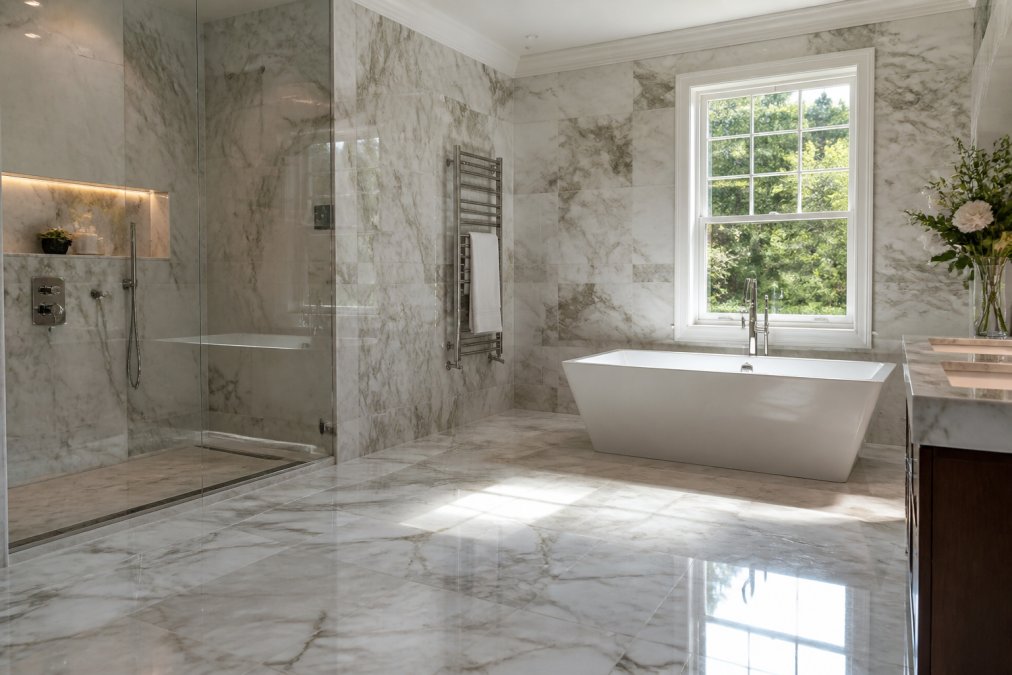
The Real Advantages of Marble Bathroom Tiles
Marble bathroom tiles offer several genuine benefits when properly selected and maintained. The aesthetic advantage is non-negotiable, marble conveys quality and permanence in ways that manufactured tiles cannot match.
Timeless visual appeal. Marble doesn’t trend; it endures. Marble can add perceived value to a home.
Variety in finishes and colors. Marble comes in white, black, grey, green, pink, and warm earth tones with dramatically varied veining patterns, allowing you to source marble that fits your specific design vision.
Cooling properties. Marble naturally stays cooler than ceramic or porcelain, adding to the luxury feel underfoot.
The Drawbacks You Need to Know About
This is where most marketing around marble bathroom tiles becomes vague. Manufacturers and installers often downplay the challenges. Here’s what actually happens when you live with marble in a bathroom.
Porosity and Moisture Absorption
Marble is porous. It absorbs water, oils, and acids. This isn’t a minor characteristic, it’s fundamental to how marble behaves as a building material.
Water sitting on unsealed marble penetrates the stone, darkening it and causing subsurface damage. Mineral deposits and soap residue accumulate in the stone’s microscopic pits.
Sealing is mandatory and requires reapplication every 12-18 months depending on foot traffic and water exposure.
Etching and Acidic Damage
Marble is calcium carbonate, and acidic substances dissolve it.
Common bathroom products that etch marble include:
- Vinegar (used in many natural cleaning solutions)
- Lemon juice
- Citrus-based cleaners
- Wine and alcohol-based products
- Toothpaste (mildly acidic)
- Some commercial bathroom cleaners
Etching creates dull spots on polished marble where acid dissolves a microscopically thin layer. Honed marble masks etching better because the matte finish diffuses light.
You must use pH-neutral products specifically formulated for natural stone, limiting your cleaning flexibility.
Slip Resistance Concerns
Polished marble is slippery. When wet, it becomes dangerously slippery. Coefficient of friction (COF) ratings measure slip resistance, higher numbers indicate better grip. Most bathroom safety guidelines recommend a COF of 0.60 or higher for wet areas.
Polished marble typically rates 0.40-0.50 COF, below safe thresholds for bathroom floors. Honed marble reaches 0.50-0.60 COF but remains borderline.
Polished marble flooring requires anti-slip treatments or textured rugs to meet safety standards.
Sealing Marble Tiles for Bathrooms: Essential Protection
Sealing is an ongoing maintenance requirement. Penetrating sealers last 12-18 months in high-moisture bathrooms; topical sealers require reapplication every 6-12 months. Sealing reduces water absorption and acid damage but doesn’t make marble impervious. Plan on resealing every 12-18 months, which requires stripping old sealer, cleaning the marble, and applying new sealer. Discussing sealing schedules during the design phase helps families understand the maintenance commitment.
Porcelain vs Marble Bathroom Tile: Which Suits Your Renovation
Porcelain and marble serve different priorities. Neither is universally “better”, the choice depends on what matters most to your bathroom renovation.
Porcelain tiles are manufactured from clay and minerals fired at high temperatures. They’re non-porous, meaning they don’t absorb water. They resist etching and staining. They come in virtually unlimited colors and patterns, including designs that mimic marble’s look. Porcelain is durable, low-maintenance, and affordable.
The trade-off: porcelain lacks the organic variation and tactile luxury of natural stone. It reads as manufactured, not naturally sourced.
Marble tiles offer authentic natural stone with unique veining and warmth. They command visual presence in a bathroom. They can add perceived value to a home. The aesthetic is unmistakably premium.
The trade-offs are significant: porosity requires sealing, acidic sensitivity limits cleaning options, slip resistance on polished finishes poses safety concerns, and maintenance costs accumulate over time.
| Factor | Porcelain | Marble |
|---|---|---|
| Water absorption | None (non-porous) | High (requires sealing) |
| Acid resistance | Excellent | Poor (etches easily) |
| Slip resistance | Good (especially textured) | Fair to poor (polished) |
| Maintenance | Minimal (pH-neutral cleaner) | Ongoing (resealing, specialized products) |
| Aesthetic uniqueness | Consistent (manufactured) | Unique (natural variation) |
| Long-term cost | Lower | Higher (sealing, repairs) |
| Resale value impact | Modest | Significant |
Bathroom Vanity Installation Services and Marble Compatibility
Marble is heavy and requires structural reinforcement beneath standard bathroom vanities. Professional bathroom renovators can assess the existing cabinet and reinforce if needed. Marble vanity edges also require careful finishing; honed or beveled edges offer more durability than polished edges.
Maintenance and Long-Term Care
Living with marble bathroom tiles requires discipline and understanding the chemistry behind maintenance rules.
The Chemistry of Marble Damage
Marble is calcium carbonate, and acidic substances (pH below 7) chemically dissolve it permanently. Common bathroom products that etch marble include vinegar, lemon juice, citrus cleaners, wine, toothpaste, and some “natural” commercial cleaners.
Etching creates dull spots on polished marble. The stone isn’t structurally damaged, but the surface is microscopically dissolved where the acid reacted. Honed marble masks etching better than polished marble because the matte finish already diffuses light. Polished marble shows every etch mark, sometimes within hours of exposure.
pH-Neutral Cleaning: What Actually Works
Use pH-neutral cleaners (pH 6.5-7.5) specifically formulated for natural stone: distilled water with a few drops of dish soap, commercial pH-neutral stone cleaners, or specialized marble cleaners. The pH scale is logarithmic, each step down represents a tenfold increase in acidity, which is why vinegar is one of the worst things you can use on marble.
Daily and Weekly Cleaning Protocol
Daily: Wipe marble surfaces with a soft, damp cloth and distilled water, then dry immediately. Weekly: Use pH-neutral stone cleaner with a soft microfiber cloth; avoid abrasive pads. Spills: Wipe acidic spills immediately, visible etching can occur within 15-30 minutes.
Grout Selection: A Critical Detail Most Installers Overlook
The grout surrounding marble tiles affects the stone’s longevity more than most homeowners realize. Improper grout choice can stain, discolor, or even damage the marble itself.
Avoid cement-based grout on marble; it’s porous and leaches minerals causing discoloration. Use epoxy or urethane grout instead, both are non-porous and won’t stain marble.
Seal grout lines separately. Even with epoxy or urethane grout, apply a penetrating grout sealer to the grout lines themselves. This adds a second barrier against water infiltration and staining. Reapply grout sealer every 12-18 months, just as you would the marble sealer.
Color selection matters. Light-colored marble looks best with light grout, but light grout shows dirt and discoloration more visibly. Darker grout hides stains but can visually overwhelm delicate veining. A mid-tone grout can complement the marble’s dominant color while minimizing visible maintenance issues.
Resealing: The Ongoing Commitment
Sealing is not a one-time installation step. It’s an ongoing maintenance requirement that defines the real cost of marble bathroom tiles over time.
A stone sealer creates a protective barrier on the marble’s surface, reducing (but not eliminating) water absorption and acid etching. Two types of sealers exist: penetrating sealers and topical sealers.
Penetrating sealers absorb into the stone, protecting from within. They’re less visible and more durable, lasting 12-18 months in high-moisture bathrooms.
Products to Avoid
Never use:
- Bleach or hydrogen peroxide (oxidizing agents that can discolor marble)
- Acidic cleaners, including those labeled “natural” or “eco-friendly” if they contain citric acid or vinegar
- Abrasive powders or scouring creams
- Oil-based polishes (they can trap moisture and cause dark spots)
- Steam cleaners on unsealed marble (the heat and moisture can penetrate and cause subsurface damage)
Never place hot items directly on marble without a trivet or coaster. Never allow standing water to sit on the surface. Never use marble in areas with constant water exposure (like a shower surround without proper waterproofing) unless you’re prepared for accelerated deterioration.
Is Marble Right for Your Bathroom Renovation
The decision hinges on three questions:
First: Does the aesthetic matter enough to justify the maintenance? If you love marble’s look and are willing to follow a disciplined care routine, marble is worth it. If you’re choosing marble primarily because it’s trendy, porcelain might deliver the look you want with less hassle.
Frequently Asked Questions
Is marble tile too slippery for bathroom floors?
Yes, marble can be slippery, especially when wet. Polished marble has a lower coefficient of friction (COF) rating than porcelain or granite. If you choose marble for bathroom floors, request a honed or textured finish rather than polished, and install slip-resistant mats or use a stone sealer designed to improve traction. For showers or wet areas, consider alternatives with higher slip resistance.
Does marble tile require special sealing in wet areas?
Absolutely. Marble is highly porous and absorbs moisture readily, making sealing essential in bathrooms. A quality stone sealer creates a waterproof barrier that reduces staining and moisture penetration. Resealing is typically needed every 12-18 months depending on bathroom humidity and usage. Use only pH-neutral cleaners, as acidic products etch marble and can compromise the sealer.
How does marble compare to porcelain for bathroom renovations?
Porcelain is more durable, water-resistant, and low-maintenance than marble. Porcelain doesn’t etch, requires no sealing, and tolerates acidic cleaners. Marble offers superior aesthetic appeal and luxury feel but demands regular maintenance, professional sealing, and careful cleaning. Choose marble if you prioritize appearance and can commit to upkeep; choose porcelain if durability and ease of maintenance matter most.
What is the best way to clean marble bathroom tiles without damaging them?
Use only pH-neutral cleaners specifically formulated for natural stone. Avoid vinegar, lemon juice, and acidic products that etch marble surfaces. Wipe spills immediately, especially from bathroom products and toothpaste. For daily cleaning, use distilled water with a few drops of mild dish soap. For deeper cleaning, hire a professional who understands stone care. Dry tiles after cleaning to prevent water spots and mineral buildup.
