
Table of Contents
- Understanding Tile Materials for Luxury Bathroom Finishes
- Slip Resistance and Safety Ratings
- Tile Size, Shape, and Visual Impact
- Color Palettes and Aesthetic Cohesion
- How to Choose Tile Grout Color and Maintenance
- Sustainable and Eco-Friendly Luxury Tile Sourcing
- How Lighting Interacts with Tile Finishes
- Getting Professional Guidance for Bathroom Renovations Near You
- Frequently Asked Questions
Last Updated: September 24, 2026
How to Choose Luxury Bathroom Tiles: A 2026 Guide
Selecting the right tiles for a luxury bathroom is one of the most consequential decisions you’ll make during your renovation. Most people approach it backwards: they fall in love with how a tile looks and only later discover whether it actually performs in a high-moisture environment. We’ve guided many homeowners through this decision and learned what separates a bathroom that looks beautiful for five years from one that looks beautiful for twenty.
Understanding Tile Materials for Luxury Bathroom Finishes
The material you select forms the foundation of everything else. Three categories dominate luxury bathroom applications: ceramic, porcelain, and natural stone. Each has distinct performance characteristics, and the differences matter more than aesthetics alone.
Ceramic is glazed clay fired at moderate temperatures. It’s affordable and offers unlimited design options, but absorbs water readily, making it suitable for walls and low-traffic areas only. In Vancouver’s climate, ceramic requires careful placement and consistent sealing.
Porcelain is clay fired at much higher temperatures, creating a denser, less porous material. Absorbency rates range from 0.5% to 3%, compared to ceramic’s 3% to 10%. Lower absorbency means less risk of mold, staining, and structural damage over time.
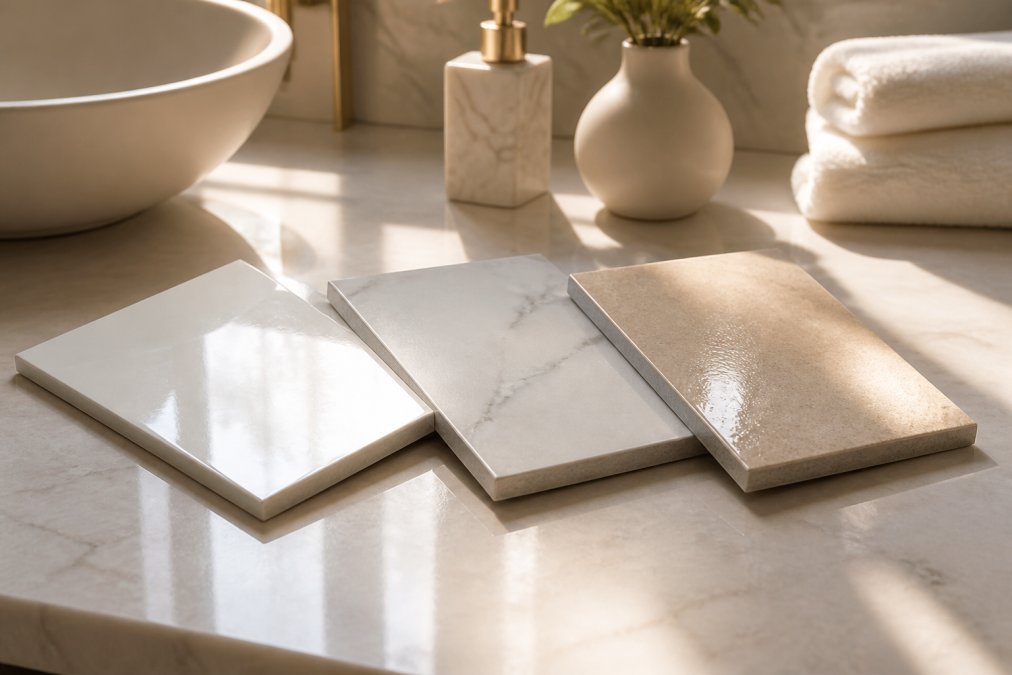
Natural stone includes marble, granite, limestone, and slate. Marble is elegant but porous and susceptible to etching; granite is harder and more stain-resistant. Both command premium prices and demand ongoing maintenance, toothpaste splatter can leave permanent marks on marble.
Absorbency and Moisture Resistance
A tile’s porosity directly influences its resistance to mold, mildew, and structural deterioration. Porcelain tiles resist moisture penetration far better than ceramic, which is critical in shower enclosures.
Water can travel through grout lines even with low-absorbency tile. Epoxy grout seals the grout line itself, creating a complete moisture barrier and has become standard in luxury bathrooms.
Slip Resistance and Safety Ratings
Slip resistance is non-negotiable in wet areas. The coefficient of friction (COF) measures a tile’s grip when wet. A COF of 0.60 or higher is generally recommended for wet areas.
Matte and honed finishes offer better slip resistance than polished tiles. Reserve polished finishes for walls or dry areas; prioritize grip over gloss for shower floors and bathroom entry points.
Tile Size, Shape, and Visual Impact
The dimensions and geometry of your tiles reshape how your bathroom feels. This is where personal preference meets practical physics.
Large-Format vs. Subway and Mosaic Tiles
Large-format tiles (24″ × 48″ or larger) create spaciousness and fewer grout lines, reducing places for water and mold to hide. Large-format porcelain combines visual drama with low absorbency.
Subway tiles (3″ × 6″ or 4″ × 8″) are classic and versatile, with more grout lines requiring diligent sealing but offering layout flexibility.
Mosaic tiles add visual interest but are impractical as primary surfaces in wet areas due to high grout-line maintenance burden.
Pattern and Layout: Herringbone, Vertical Stack, and Beyond
Herringbone patterns create visual movement but are more complex to install. Vertical stack patterns feel clean and contemporary, install faster, and are easier to maintain.
Color Palettes and Aesthetic Cohesion
Color sets the emotional tone of your bathroom and influences both daily satisfaction and long-term resale value. This is where aesthetic preference meets practical investment strategy.
Color Psychology and Bathroom Atmosphere
Neutral palettes (whites, grays, soft beiges, warm taupes) create spa-like calm and are the safest choice for long-term appeal and resale value. They feel timeless and appeal to the broadest buyer pool.
Darker tiles (charcoal, deep gray, black) create intimacy and drama but show water spots and dust readily, demanding frequent cleaning. They absorb light, potentially making small bathrooms feel confined.
Cool tones (blues, greens, cool grays, soft whites) feel contemporary but can feel cold if not balanced with warm lighting.
Aesthetic Cohesion: Walls, Floors, and Fixtures
Consistency in tone and finish across surfaces creates cohesion. Match material and tone for visual continuity, coordinate tone with different finishes for interest, or use contrasting accents strategically. If using natural stone on walls, the floor should match or coordinate in tone.
Long-Term Resale Value and Tile Color
Neutral and timeless colors recover 60-80% of renovation costs at resale. Contemporary but not trendy colors recover 50-70%. Bold or highly personal colors recover 30-50%. High-maintenance colors reduce perceived value due to anticipated maintenance burden.
Viewing Samples in Your Actual Lighting
Tile color shifts dramatically between showroom and home. Pull samples home and view them in morning light, under your ceiling fixtures, under vanity lighting, and in evening light. A 48-hour observation period in your actual bathroom reveals far more than any color swatch.
Color Recommendations by Bathroom Type
For small bathrooms: Light, neutral tones make the space feel larger; avoid very dark colors. For large bathrooms: Darker tones and bold accents work well. For limited natural light: Warm, light tones and textured finishes perform best. For abundant natural light: Cooler tones and polished finishes work well. For master bathrooms: Stick with neutral, timeless colors for resale impact. For powder rooms: You have more freedom for personal expression.
How to Choose Tile Grout Color and Maintenance
Grout color is a subtle but powerful design element. Light grout minimizes visual lines and makes space feel larger. Dark grout emphasizes the grid and adds definition. The choice is partly aesthetic and partly practical.
Grout Types: Standard, Epoxy, and Specialty Options
Standard cement-based grout is affordable but porous, stains readily, and requires sealing. Many homeowners regret it within a few years.
Sealing and Long-Term Durability
Standard grout requires mandatory sealing and degrades over time. Epoxy grout eliminates this concern.
Sustainable and Eco-Friendly Luxury Tile Sourcing
Locally sourced porcelain reduces carbon footprint. Look for manufacturers with transparent sourcing practices and environmental certifications. Sustainable luxury tiles typically cost more and require longer lead times, but align with the ethos of durable, long-lasting renovations.
How Lighting Interacts with Tile Finishes
The finish of your tile, matte, honed, polished, or textured, transforms dramatically under different lighting conditions. This is why showroom samples alone don’t tell the full story, and why this step is often the difference between a tile choice you love for 20 years and one you regret within two.
Understanding Finish Types and Light Behavior
Polished finishes reflect light like a mirror, making spaces feel brighter and larger. The trade-off: they show every water spot and soap residue, feel cold under warm lighting, and present slip hazards when wet.
Evaluating Tiles in Your Actual Bathroom Lighting
Showroom lighting is bright, neutral, and uniform, your bathroom is not. Most bathrooms combine natural daylight, recessed ceiling fixtures (3000K-4000K), and vanity lighting (2700K-5000K). Each affects how tiles appear.
The Testing Protocol
Before committing to a tile, take samples home and install them temporarily in your bathroom. Observe them:
- In morning light (if your bathroom has windows): Note how the finish appears and whether the color shifts.
- Under your existing ceiling fixtures: Turn on the lights at different times of day to see how the tile responds to your specific bulb color temperature.
- Under your vanity lighting: This is where most people discover surprises. Vanity light is often the dominant light source when you’re actually in the bathroom, and it reveals every detail.
- In evening light: Observe how the tile appears when natural light fades and artificial light dominates.
- When wet: Spray the sample with water and observe how the finish changes. Polished tiles become more reflective and slippery. Matte tiles may darken slightly. Honed and textured finishes often look richer when wet.
Lighting Recommendations by Finish and Bathroom Type
For small bathrooms with limited natural light: Honed or textured finishes in light to medium tones perform best. They reflect enough light to prevent the space from feeling cramped while maintaining visual interest. Avoid very dark polished tiles, which absorb light and make the space feel smaller.
Getting Professional Guidance for Bathroom Renovations Near You
Selecting luxury bathroom tiles involves technical knowledge, design sensibility, and understanding your home’s specific moisture and structural conditions. Working with a professional renovator who specializes in bathrooms ensures your choices are both beautiful and durable.
Frequently Asked Questions
What bathroom tile never goes out of style?
Neutral subway tiles, large-format porcelain, and natural stone like marble remain timeless choices for luxury bathroom tiles. These materials work with any design direction and don’t date quickly. Glazed ceramic in soft whites, grays, and warm beiges also hold their appeal across decades. The key is choosing quality materials with classic proportions rather than trendy colors or patterns that may feel dated in five years.
How do I choose the right tile for a small bathroom to make it look larger?
Larger tiles with fewer grout lines create visual continuity and make compact spaces feel more expansive. Light colors and polished or honed finishes reflect more light, enhancing spatial perception. Vertical stacking patterns draw the eye upward, making ceilings feel higher. Avoid busy mosaics or very small tiles in confined spaces, as they fragment the visual field and make rooms feel cramped.
What is the best way to choose tile grout color for luxury finishes?
Match grout color to your tile to minimize visual interruption, or contrast it deliberately for design impact. Light grout on light tiles creates seamless aesthetics; dark grout on light tiles emphasizes the grid. Epoxy grout resists staining better than standard grout and is ideal for high-moisture areas. Consider your lifestyle and maintenance tolerance when selecting, darker grouts hide dirt but require precise application, while lighter grouts show imperfections but feel cleaner.
Why is porosity important when choosing luxury bathroom tiles?
Porosity determines how much moisture a tile absorbs, which affects durability and mold resistance in wet environments. Porcelain has low porosity (less than 0.5% water absorption) and resists moisture better than ceramic. Natural stone varies widely in porosity and typically requires sealing before installation. In bathrooms with high humidity or frequent water exposure, low-porosity tiles prevent moisture penetration into substrate layers, extending the life of your renovation.
Choosing luxury bathroom tiles is a decision that shapes your daily experience and your home’s long-term value. The right material, finish, and installation approach create a bathroom that’s both beautiful and resilient. Get your free consultation with Bathroom Renovators and let our team guide you through the selection process with the expertise of over two decades of bathroom renovations. We’ll help you choose tiles that match your vision and your home’s needs.
