
Table of Contents
- Modern Bathroom Lighting Design Trends Shaping 2026
- Bathroom Lighting Ideas That Work in Small and Large Spaces
- Bathroom Vanity Lighting: Function Meets Style
- Layered Bathroom Lighting for Ambient, Task, and Accent
- Bathroom Lighting Placement: Safety and Wet-Zone Ratings
- Energy Efficiency and Fixture Longevity in Bathroom Lighting
- Designing Accessible Bathroom Lighting for Every Life Stage
- Bringing Modern Lighting Design Into Your Bathroom Renovation
- Frequently Asked Questions
Last Updated: October 13, 2026
Modern Bathroom Lighting Design Trends Shaping 2026
Bathroom lighting has evolved far beyond a single overhead fixture. Today’s approach combines aesthetic appeal with functional illumination that transforms how you start and end each day. At Bathroom Renovators, we’ve seen firsthand how the right lighting design can make a small space feel expansive and a dated bathroom feel brand new.
Modern bathroom lighting design now emphasizes layered illumination, mixing ambient warmth with task-focused brightness and accent lighting that adds visual interest. The trend toward sculptural fixtures and warm metallic finishes reflects a broader shift: bathrooms are no longer purely utilitarian spaces. They’re sanctuaries where design matters as much as function.
This guide covers the bathroom lighting design trends shaping 2026, from statement pendants and modern finishes to safety considerations and energy efficiency. Whether you’re planning a quick refresh or a full bathroom renovation, understanding these trends helps you make choices that look great today and hold up over time.
Bathroom Lighting Ideas That Work in Small and Large Spaces
Effective bathroom lighting ideas start with understanding how light behaves in different room sizes. Small bathrooms benefit from fixtures that don’t consume visual space, think wall sconces and recessed lighting that provide brightness without bulk. Larger bathrooms can support more dramatic statement pieces that anchor the design.
The key is avoiding a one-size-fits-all approach. A pendant that works beautifully in a spacious ensuite can overwhelm a compact powder room. Similarly, a fixture perfect for a master bathroom may look undersized in a shared family bath.
Statement Pendants and Sculptural Fixtures
Statement pendants have become a defining element of modern bathroom lighting design. These aren’t your standard utilitarian fixtures, they’re sculptural pieces that serve as visual focal points while delivering functional illumination.
Sculptural lighting works best when hung at the right height and positioned to complement your vanity layout. A single oversized pendant above a floating vanity creates drama, while paired pendants flanking a large mirror offer symmetry and balanced task lighting. The sculptural quality comes from the fixture’s shape, materials, and how it interacts with light, whether through perforated metal, geometric forms, or organic curves.
When selecting statement pendants, consider scale relative to your bathroom size. The fixture should feel intentional, not cramped.
Matte Black and Brass Finishes
Modern bathroom lighting design increasingly favors warm metallic finishes and matte black. These finishes move away from chrome’s clinical feel toward materials that age gracefully and complement contemporary design aesthetics.
Matte black fixtures provide contrast against light tile and cabinetry, creating visual definition without harshness. Brass, whether warm or antique, adds warmth and luxury, especially in bathrooms with wood accents or natural stone. The contrast between matte black and brass is also trending: pairing a matte black pendant with brass sconces, or vice versa, creates intentional visual balance.
These finishes also hide water spots and fingerprints better than polished chrome, reducing maintenance in a moisture-heavy environment.
Bathroom Vanity Lighting: Function Meets Style
Bathroom vanity lighting is where function and design intersect most critically. Poor vanity lighting creates shadows across your face, making grooming tasks difficult. Excellent vanity lighting flatters your skin tone while providing the brightness needed for shaving, makeup application, and skincare routines.
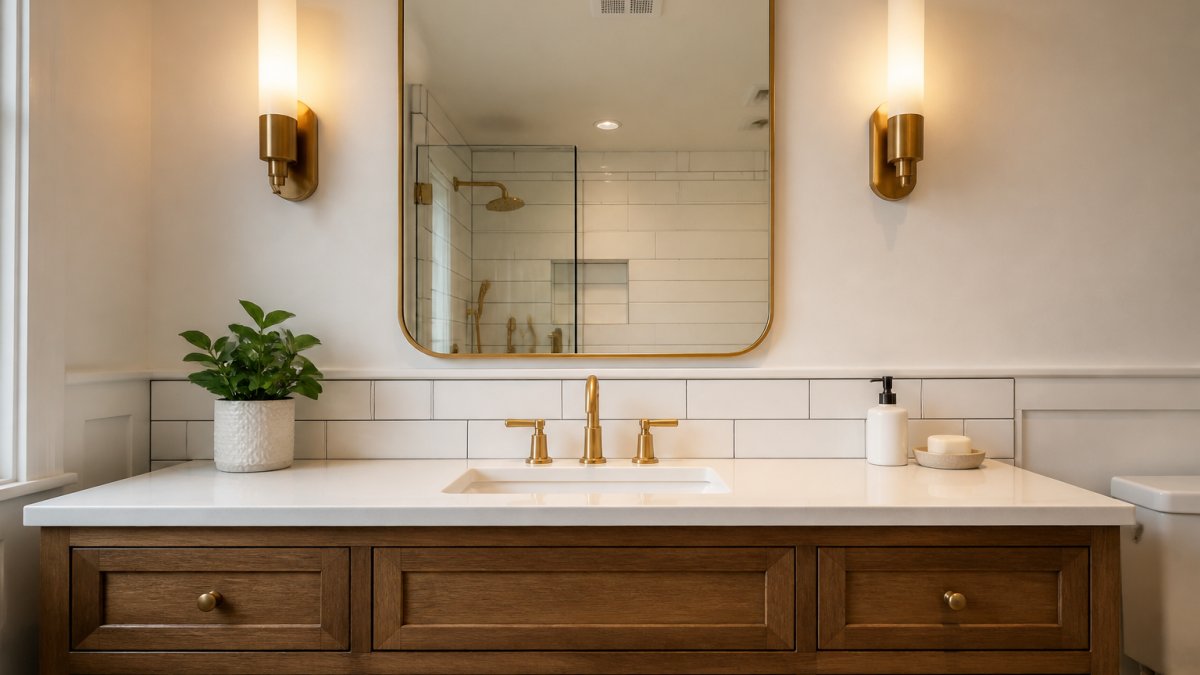
The modern approach combines layered bathroom lighting placement: ambient light from above or behind, task light directly at mirror level, and sometimes accent lighting that adds visual interest. This layering prevents harsh shadows and creates a spa-like atmosphere.
Why Mirror Placement Matters
Mirror size and placement directly influence how you position vanity lighting. A large mirror that extends to the ceiling allows for sconces placed higher, reducing glare. A smaller, centered mirror benefits from sconces positioned at eye level or slightly above.
The distance between sconces matters too. Placing them too far apart creates uneven illumination across your face. For a double vanity, you might position sconces on either side of each sink, or use a longer fixture that spans the entire mirror.
When planning a bathroom renovation, mirror placement should be finalized before lighting placement, not the other way around.
Sconce Placement for Even Illumination
Wall sconces flanking a mirror remain the gold standard for bathroom vanity lighting. They provide even, shadow-free illumination across your face while contributing to the overall aesthetic.
Proper sconce placement prevents the “raccoon eyes” effect that occurs when light comes only from above. Sconces should be positioned with their centers at approximately eye level. This positioning delivers light across your face without creating shadows in the eye area.
The finish and shade design matter as much as placement. Opaque shades direct light downward and forward; translucent shades create softer ambient light. For a modern bathroom lighting design, consider sconces with minimal shade coverage or open-frame designs that expose the bulb, creating visual interest while maintaining function.
Layered Bathroom Lighting for Ambient, Task, and Accent
Layered bathroom lighting design separates illumination into three functional categories: ambient (overall brightness), task (focused light for specific activities), and accent (highlighting architectural or design features).
Ambient lighting typically comes from flush-mount or recessed fixtures positioned to provide general brightness without creating harsh shadows. Task lighting concentrates brightness where you need it, at the vanity, in the shower, or above the toilet. Accent lighting adds visual depth: perhaps a backlit mirror, uplighting along the ceiling, or a sculptural fixture that serves double duty.
This three-layer approach prevents the flat, clinical feeling of a single overhead light. It also allows you to adjust the mood, bright for morning routines, softer for evening relaxation.
Dimmer switches amplify the benefit of layered bathroom lighting design by letting you control brightness across different times of day and moods. A bathroom that feels energizing at 7 a.m. can feel calming at 10 p.m. with the same fixtures.
Bathroom Lighting Placement: Safety and Wet-Zone Ratings
Safety is non-negotiable in bathroom lighting placement. Bathrooms are wet environments where water, steam, and moisture create electrical hazards. Proper placement and fixture ratings protect against shock and equipment failure.
Understanding Wet-Zone Electrical Requirements
Bathroom lighting fixtures must be rated for their specific zone. The Canadian Electrical Code defines zones based on proximity to water sources. Fixtures directly above or near tubs, showers, and sinks must meet higher moisture-resistance standards than fixtures in dry areas of the bathroom.
Fixtures rated IP65 or higher are appropriate for wet zones, they’re sealed against water spray and moisture. Fixtures in dry areas (away from water sources) can have lower ratings. Understanding these distinctions ensures your bathroom lighting design meets code and performs safely over time.
Electrical placement also matters. Outlets and switches should be positioned away from direct water exposure. Consult local electrical code or work with a professional to ensure compliance.
Recessed and Flush-Mount Fixtures
Recessed lighting sits flush with the ceiling, minimizing visual clutter while providing reliable ambient illumination. These fixtures work particularly well in small bathrooms where hanging pendants or chandeliers would consume visual space.
Recessed fixtures rated for wet locations (IC-rated and sealed) can be installed directly above showers and tubs. In dry zones, standard recessed fixtures are appropriate. The spacing and number of recessed lights depends on ceiling height and desired brightness.
Flush-mount fixtures sit directly against the ceiling, offering a compact alternative to recessed lighting. They work well in bathrooms with lower ceilings or where recessed installation isn’t feasible. Modern flush-mount designs range from minimalist to sculptural, fitting various aesthetic preferences.
Energy Efficiency and Fixture Longevity in Bathroom Lighting
LED technology has transformed bathroom lighting from an energy drain to an efficient, long-lasting solution. Modern LED fixtures consume less energy than incandescent bulbs and last a long time with typical bathroom use.
This longevity reduces replacement frequency, particularly valuable in hard-to-reach fixtures like ceiling-mounted lights or recessed cans. A bathroom lighting design using LED fixtures minimizes maintenance and keeps your space looking current longer.
Warm color temperature (2700K to 3000K) is standard for bathrooms, creating the soft, flattering light associated with spa-like environments. Cool temperatures (4000K and above) feel clinical and are generally avoided in residential bathrooms. Dimmable LED fixtures allow you to adjust brightness and mood without sacrificing energy efficiency.
Designing Accessible Bathroom Lighting for Every Life Stage
Accessible bathroom lighting design anticipates changing needs. Whether aging in place, accommodating mobility challenges, or planning for a growing family, thoughtful lighting supports safety and independence.
Bright, even illumination reduces fall risk by eliminating shadows and dark corners. Motion-activated lighting in wet areas like showers provides automatic illumination without requiring switch operation. Lever-style switches are easier to operate than traditional toggle switches for anyone with limited hand dexterity.
Task lighting positioned for seated vanity use accommodates wheelchair access or those with mobility limitations. Sconces placed at eye level while seated ensure adequate light for grooming tasks. Shower lighting should be bright enough to spot hazards, slippery surfaces, obstacles, without creating glare.
These design choices benefit everyone. Aging in place isn’t just for seniors; universal design principles make bathrooms safer and more functional for all users.
Bringing Modern Lighting Design Into Your Bathroom Renovation
When you’re planning a bathroom renovation, lighting design shouldn’t be an afterthought.
Start by assessing your current lighting. What works? What frustrates you? Does your vanity lighting cast shadows? Is your shower too dark? Does the overall space feel cramped or cold?
Consider your bathroom’s architecture and finishes. Warm metallic fixtures complement natural wood or warm tile. Matte black fixtures create contrast against light, neutral palettes. Sculptural pendants anchor modern, minimalist spaces.
Budget for quality fixtures that match your bathroom’s durability standards. A bathroom lighting design is only as good as the fixtures’ performance over time.
At Bathroom Renovators, we approach bathroom lighting design as integral to the overall renovation. Our typical bathroom renovations complete in 7 to 10 days, including full lighting design and installation, and we back everything with a 1-year warranty.
The right bathroom lighting design transforms your space from purely functional to genuinely enjoyable. Whether you’re refreshing a tired bathroom or building a spa-like sanctuary, thoughtful illumination makes all the difference.
A well-designed bathroom lighting plan balances aesthetics, function, and safety.
| Lighting Type | Best For | Key Benefit |
|---|---|---|
| Wall Sconces | Vanity areas | Even facial illumination |
| Recessed Lights | Ambient, small spaces | Clean, uncluttered ceiling |
| Pendant Fixtures | Statement design, task areas | Visual interest and function |
| Flush-Mount Fixtures | Low ceilings, compact spaces | Compact, reliable illumination |
| LED Technology | All fixtures | Energy efficiency and longevity |
Canadian Electrical Code requirements for bathroom lighting zones
Energy Star guidelines for bathroom lighting efficiency
Universal design principles for accessible bathrooms
Frequently Asked Questions
What are the current bathroom lighting design trends for 2026?
Modern bathroom lighting design in 2026 emphasizes layered illumination combining ambient, task, and accent lighting. Key trends include sculptural pendant fixtures, matte black and warm brass finishes, LED continuous strips, and statement lighting that doubles as décor. Designers are moving away from single overhead fixtures toward multiple light sources that create visual texture and a spa-like atmosphere while maintaining functional task lighting at vanities and shower areas.
How should bathroom lighting be layered effectively?
Layered bathroom lighting uses three types working together: ambient lighting (soft overall illumination from recessed or flush-mount fixtures), task lighting (bright, focused light at the vanity for grooming), and accent lighting (decorative pendants or wall sconces that add visual interest). Start with recessed lights for base illumination, add sconces or pendants flanking the mirror for task work, then incorporate accent fixtures or LED strips to highlight architectural features or create mood. This approach prevents harsh shadows and creates a functional yet inviting space.
Where should sconces be placed beside a bathroom mirror?
Wall sconces should be positioned on either side of the mirror, with the center of each sconce at or slightly above eye level. This placement minimizes shadows on the face during grooming tasks. Ensure sconces are mounted at equal heights and distances from the mirror for visual balance. For double vanities, place sconces between each sink and the outer wall, or position them symmetrically if space allows. Proper placement prevents the harsh shadows that single overhead lighting creates.
What type of lighting is best around a bathroom vanity?
Bathroom vanity lighting works best when it combines task and ambient elements. Wall sconces on either side of the mirror provide shadow-free task lighting for grooming. LED fixtures with a warm color temperature (2700K to 3000K) create flattering, functional light without excessive brightness. Avoid placing lights only above the mirror, as this casts shadows under the eyes and nose. If adding a mirror-mounted light bar, pair it with flanking sconces for even illumination. Choose fixtures rated for wet locations to ensure safety and durability in moisture-prone bathroom environments.
