
Table of Contents
- One-Day Remodel vs. a 7 Day Bathroom Renovation: What Actually Changes
- What Decides Your Renovation Timeline
- Bathroom Renovations That Realistically Fit in 7 to 10 Days
- Why Bathroom Reno Vancouver Projects Slip Past the Deadline
- Disabled Bathroom Renovations: Why Accessibility Work Needs Extra Time
- Bathroom Vanity Installation Services and the 7 Day Clock
- Living Through a 7 Day Renovation: A Survival Guide
- Conclusion
- Frequently Asked Questions
Last Updated: September 26, 2026
One-Day Remodel vs. a 7 Day Bathroom Renovation: What Actually Changes
A 7 day bathroom renovation is realistic, but only when the work stays cosmetic and the trades line up. The moment you move plumbing or tear into walls, the clock resets.
Here’s the honest split. A one-day remodel is a surface job: a liner over the existing tub, a new vanity top, fresh caulk. It hides what’s underneath. A true 7 day bathroom renovation replaces what you can’t see, including the waterproofing, the substrate, and often the plumbing rough-in.
At Bathroom Renovators, we’ve spent 19 years renovating homes, right here in our beautiful city, and we’ve watched both promises play out. The one-day pitch sells speed. The 7 to 10 day version sells a bathroom that lasts.
So which one do you actually need? That depends on what’s behind your walls.
What Decides Your Renovation Timeline
Three things set the schedule: the scope of work, the permit and inspection schedule, and how fast materials arrive. Get any one of them wrong and your timeline slips.
Cosmetic Changes vs. Structural Issues
Cosmetic work is surface-level. Think tile, paint, a vanity replacement, new fixtures on existing rough-in. This is where a short timeline lives.
Structural work is different. Water damage, rot, a moved drain, or a wall that has to come out all add days. A common mistake is assuming a “simple” refresh will stay simple once the demolition phase starts.
Permits, Inspections, and Building Codes
Permit requirements are the quiet killer of tight timelines. Moving plumbing or changing electrical usually needs a permit and an inspection, and inspectors work on their own schedule, not yours.
Building codes exist to protect you. They also add steps that no contractor can skip, no matter how fast they work.
Skipping a permit to save a few days can backfire badly. Unpermitted work can stall a future home sale, and your insurer may refuse a water damage claim if the work wasn’t inspected.
Bathroom Renovations That Realistically Fit in 7 to 10 Days
A full cosmetic overhaul fits comfortably in 7 to 10 days. That means new tile, a vanity replacement, fixtures, lighting, and paint, all on existing plumbing. What separates a project that actually lands inside that window from one that drifts is not the size of the job, it is whether the work can be sequenced so no trade ever waits on another.
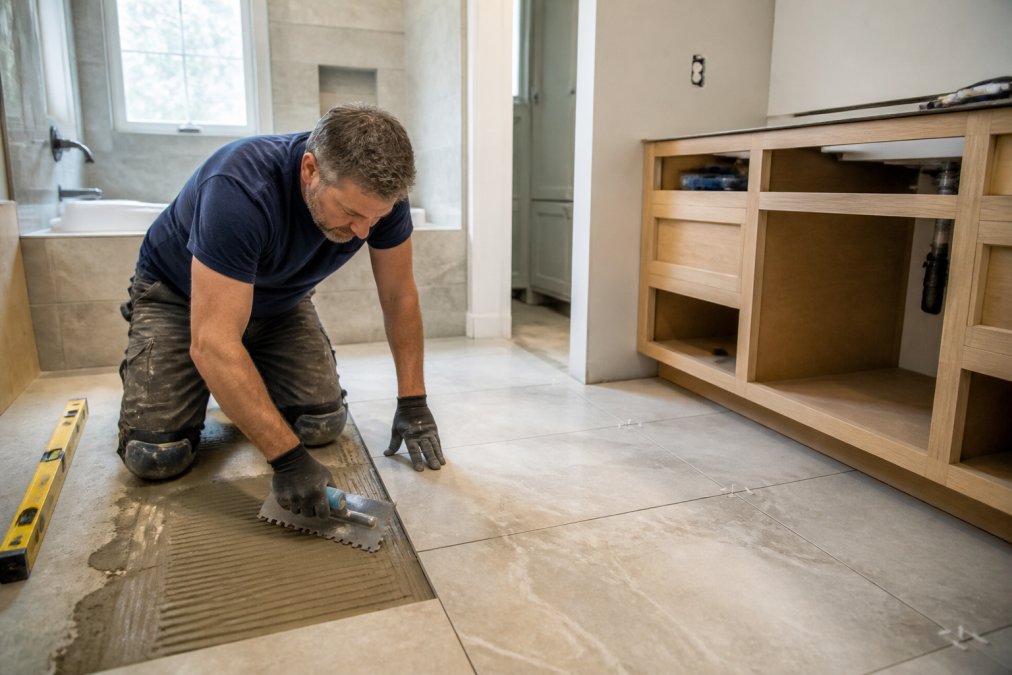
Here is how a realistic 7-to-10-day sequence actually runs when the scope stays cosmetic:
- Day 1, Protection and demolition. Floor protection goes down, the old vanity, toilet, and fixtures come out, and the room is stripped back to the substrate. Debris is staged for removal the same day.
- Days 2-3, Rough-in verification and substrate prep. The crew confirms the existing plumbing and electrical are sound, replaces any compromised cement board or drywall, and preps the floor for tile. If the rough-in is fine, no permit is triggered.
- Days 3-4, Waterproofing and tile. Waterproofing membrane goes in and cures, then wall and floor tile is set. Large-format tile moves faster than mosaic; a herringbone or small-hex pattern adds a day on its own.
- Days 5-6, Grout, paint, and trim. Grout cures, walls are painted, and trim and baseboards go in.
- Days 7-8, Vanity, toilet, and fixtures. The vanity is set, the toilet is reset, and shower and sink fixtures are connected.
- Days 9-10, Caulking, cleanup, and punch list. Silicone cures, the room is cleaned, and any touch-ups are handled.
That sequence assumes the materials are already on site. If the vanity or tile is still in transit on day one, the calendar stretches regardless of how fast the crew works.
What fits:
- Full tile installation on walls and floor
- Vanity replacement with new plumbing connections at the same spot
- New toilet, shower fixtures, and lighting
- Fresh paint and waterproofing
- Bathroom vanity installation services where the drain and supply lines stay put
What doesn’t fit:
- Moving a drain or supply line
- Removing a wall or changing the layout
- Fixing hidden water damage
- Disabled bathroom renovations that require a roll-in shower, blocking, or a widened doorway
A useful rule of thumb: if the work touches only what is visible, 7 to 10 days is realistic. If it touches what is behind the wall or under the floor, the schedule resets and the permit and inspection steps come back into play.
Why Bathroom Reno Vancouver Projects Slip Past the Deadline
Projects slip for predictable reasons, and almost none of them are about speed on the tools. They are about what happens before and around the work. The three that show up most often are trade sequencing, what is hiding behind the wall, and material lead times, and the third is the one most homeowners underestimate.
Contractor scheduling is the first culprit. When one trade runs late, the next one waits. Subcontractors book weeks out, so a single missed day can push everything back. A tiler who is two days behind does not just delay tile, it delays grout, paint, and the vanity set that follows.
The second culprit is the surprise behind the wall.
Supply Chain and Lead Time Reality
A common pattern looks like this:
- Stock tile from a local supplier: often available same week, sometimes same day.
- Special-order or imported tile: frequently two to six weeks, and longer if the dye lot has to be matched.
- Custom or made-to-order vanity: commonly four to eight weeks depending on the manufacturer and finish.
- Custom glass shower enclosure: typically templated after tile is set, then fabricated, which adds its own gap near the end of the job.
- Specialty fixtures (freestanding tubs, niche trim, accessible grab bars): variable, and worth confirming before demolition.
Ask your contractor for the material order date before work starts. If the vanity and tile are not ordered before demolition, the schedule is already at risk. A written order confirmation with a delivery date is stronger than a verbal “it should be in.”
A “7-day” quote that does not name the specific vanity, tile, and fixture models is not a schedule, it is an estimate built on products that may not exist in that timeframe. Confirm the exact SKUs before you sign.
For bathroom renovations in Coquitlam, Port Moody, and across the North Shore, the same lead-time math applies regardless of municipality. The variable is not the city, it is whether the materials were locked in before the first hammer swung.
Disabled Bathroom Renovations: Why Accessibility Work Needs Extra Time
Disabled bathroom renovations take longer because they change the structure, not just the surface. A roll-in shower needs the floor rebuilt for drainage. Grab bars need blocking inside the walls. A wider doorway may mean framing work.
Bathroom Vanity Installation Services and the 7 Day Clock
Bathroom vanity installation services are one of the few upgrades that can fit inside a 7 day window, as long as the plumbing stays put. Swap the vanity in the same spot and you avoid the permit and rough-in delays.
Living Through a 7 Day Renovation: A Survival Guide
Living through a renovation is the part most guides skip. Here’s how to keep your household running while the work happens.
- Set up a temporary wash station before day one
- Move valuables and medications out of the work zone
- Expect dust, even with plastic barriers up
- Confirm daily start and finish times with your crew
- Ask where construction debris will be staged
Your Contractor Communication Checklist
Good communication prevents most delays. Use this checklist before and during the job:
- Get the full schedule in writing, day by day
- Confirm who handles permits and inspections
- Ask how change orders and unexpected repairs are priced
- Get the warranty terms in writing
- Request recent references you can actually call
- Agree on a daily check-in time
The single biggest predictor of an on-time renovation isn’t speed. It’s clear, written communication before the first hammer swings.
Conclusion
The real question isn’t whether a 7 day bathroom renovation is possible. It’s whether your project is the kind that fits in that window. Cosmetic work can move fast. Structural work, accessibility upgrades, and layout changes need more time, and rushing them costs more later.
Frequently Asked Questions
Is a 7-day bathroom renovation realistic for a full gut?
For a full gut, seven days is tight but achievable when the scope is agreed upfront and materials are on site before demolition starts. Removing old tile, redoing a plumbing rough-in, hanging new drywall, waterproofing, tiling, and setting fixtures each take fixed time. The schedule breaks when walls open to water damage or when a permit inspection has to be booked. Ask any contractor to show you a written day-by-day schedule before you sign.
What are the most common delays in a bathroom renovation?
The usual culprits are material lead times, surprise water damage behind the walls, permit and inspection scheduling, and subcontractor backlogs. A vanity or tile order that arrives late stalls the whole sequence because nothing downstream can start. Ask your renovator which items have the longest lead times and confirm they are ordered before the demolition phase begins, not after.
How does a one-day remodel differ from a full renovation?
A one-day remodel covers surface-level work only: a tub or shower liner, a new surround, or a vanity replacement over existing plumbing. A full renovation opens the walls, replaces plumbing rough-in and waterproofing, and rebuilds the room. The one-day version is faster and less disruptive, but it cannot fix structural issues, water damage, or a layout that does not work. Choose based on what is actually behind your walls.
What should be in a bathroom renovation contract timeline?
A workable timeline lists each phase in order, names who is responsible for ordering materials, sets a start and completion date, and states how change orders affect the schedule. It should also name the permit pull date and the inspection windows. If the contract only says the project takes 7 to 10 days with no phase breakdown, you have no way to tell whether the schedule is realistic.
