
Table of Contents
- Why Slip-Resistant Tiles Matter in Luxury Bathroom Design
- Understanding Bathroom Tile Slip Resistance Ratings and Standards
- Slip-Resistant Porcelain Tile for Bathrooms: Durability Meets Elegance
- Textured Bathroom Floor Tiles: Design and Safety Combined
- Mosaic Tiles for Shower Floors: Small Format, High Performance
- Choosing the Right Tile for Your Bathroom Zones
- Maintenance Trade-Offs: Keeping Textured Surfaces Clean
- Getting Your Bathroom Renovation Right
- Frequently Asked Questions
Last Updated: October 16, 2026
Why Slip-Resistant Tiles Matter in Luxury Bathroom Design
Slip-resistant tiles are essential for any bathroom, but they’re often overlooked in luxury designs where aesthetics seem to take priority. The truth is that the best slip-resistant tiles for luxury bathrooms don’t sacrifice beauty for safety; they combine both seamlessly.
Bathrooms are high-moisture environments where falls happen quickly and consequences are serious. A slip on wet tile can mean broken bones, head injuries, or worse. Yet many homeowners assume slip-resistant tiles look industrial or cheap. That assumption is outdated. Today’s luxury tile options deliver sophisticated aesthetics with genuine traction, making safety invisible to the eye but undeniable underfoot.
The challenge is knowing which tiles actually perform. Not all textured surfaces grip equally, and not all matte finishes are created the same. This guide walks you through the science, the standards, and the specific tile types that work best in different bathroom zones, so you can design a bathroom that’s both beautiful and genuinely safe.
Understanding Bathroom Tile Slip Resistance Ratings and Standards
Slip resistance is measured, not guessed. Understanding the ratings helps you make informed choices rather than relying on marketing language alone.
Tiles are tested for slip resistance using standardized methods that measure how much friction exists between the tile surface and a foot (wet or dry). The most common rating systems are R-values, which range from R9 (lowest traction) to R13 (highest). An R9 tile has minimal grip; an R11 or R12 offers substantial slip resistance suitable for wet bathroom floors.
The testing isn’t perfect, though. A tile rated R11 in a laboratory may perform differently in your shower, where water temperature, soap residue, and foot pressure all change the equation. The rating tells you the tile can grip, not that it will grip in every scenario.
When evaluating tiles, look beyond the number. Ask about the testing standard used (European standards differ from others), the specific finish type, and how the tile performs in real bathrooms. For instance, the CSA Group provides standards relevant to building materials in Canada.
Slip-Resistant Porcelain Tile for Bathrooms: Durability Meets Elegance
Porcelain is a material often chosen for luxury bathrooms because it delivers performance that ceramic may not match. Porcelain tiles are denser, less porous, and more durable than ceramic, which means they resist water absorption, staining, and wear over time.
Why porcelain outperforms ceramic in wet areas
Porcelain’s density is the key difference. Ceramic is more porous, which means it absorbs water and moisture over time. In a bathroom, especially a shower, this absorption weakens the tile and can lead to mold growth in the subsurface. Porcelain’s low porosity keeps water on the surface where it belongs, making it naturally more resistant to the moisture that bathrooms throw at it.
This density also means porcelain can hold its finish longer. A matte porcelain tile may maintain its texture and grip for years, while a ceramic tile’s surface can wear smooth with time. For a luxury bathroom, porcelain can be an investment that pays off in longevity.
Porcelain also accepts a range of finishes. You can have a sophisticated matte finish, a subtle texture, or even a polished look on porcelain. Ceramic may limit options as some finishes can make it slippery.
Matte and textured finishes for safety without sacrifice
Matte finishes are the modern luxury standard for bathrooms. They eliminate gloss, which means no shine bouncing off wet tile and no slippery surface. A matte porcelain tile looks contemporary and sophisticated while offering genuine grip.
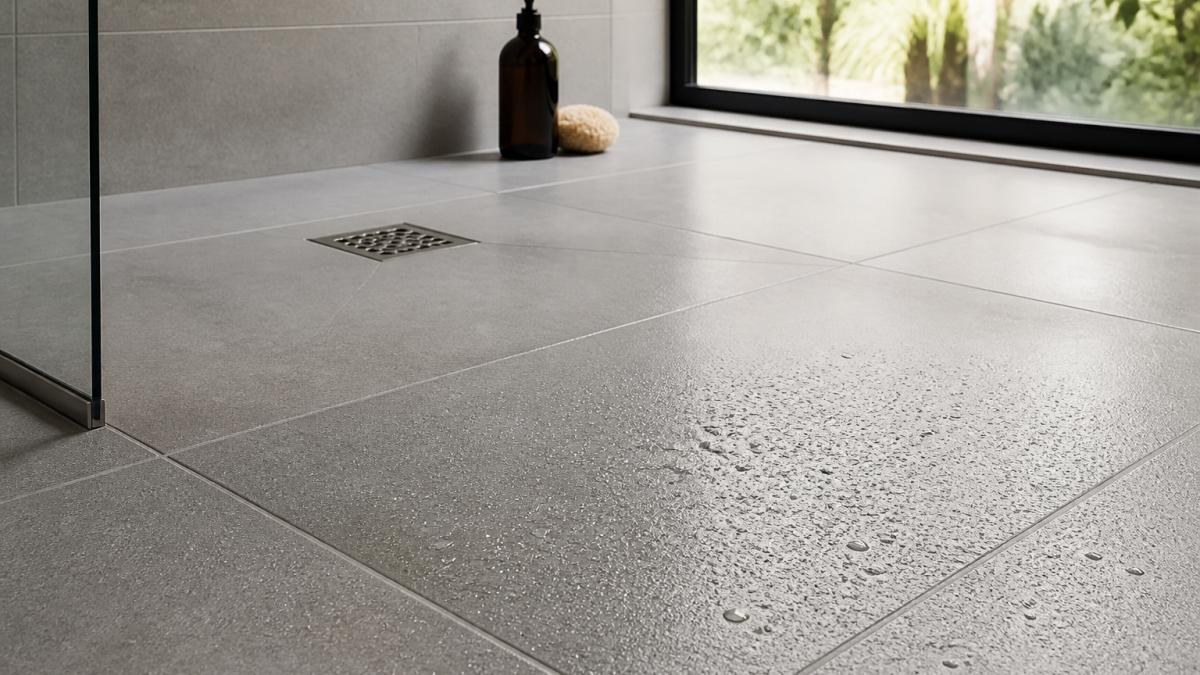
Textured finishes go further. A subtle texture, one that’s visible up close but doesn’t dominate the aesthetic, adds mechanical grip that works even on soapy, wet surfaces. The texture doesn’t have to be obvious.
The trade-off is maintenance. Textured surfaces collect soap residue, mineral deposits, and dirt more easily than smooth tiles. You’ll need to clean more frequently and use the right grout and sealant to prevent staining. But for many homeowners, the safety benefit and design sophistication are worth the extra care.
Textured Bathroom Floor Tiles: Design and Safety Combined
Texture is where slip-resistant design becomes visible. A textured surface interrupts water flow and creates friction, which is why textured tiles grip better than smooth ones. But texture also changes how a room feels and how it photographs.
The best approach is restraint. A heavily textured tile can look rustic or industrial, which works in some designs but feels out of place in a luxury bathroom.
Stone-look tiles offer a smart middle ground. Many porcelain tiles mimic natural stone finishes, which inherently have variation and texture. A slate-look porcelain tile, for instance, has the visual richness of natural stone with the durability and slip resistance of engineered porcelain.
Mosaic tiles (small-format tiles) create texture through their grout lines. The grout itself becomes part of the grip system, which is why mosaic floors can feel safer underfoot than large-format tiles. This is especially valuable in shower areas where water flow is constant and grip is critical.
Mosaic Tiles for Shower Floors: Small Format, High Performance
Mosaic tiles, typically measuring from 2.5 cm to 5 cm (approximately 1 to 2 inches) in size, are among the most slip-resistant options available. The reason is simple: more grout lines mean more grip points. Water doesn’t flow smoothly across a mosaic floor; it’s interrupted by the grout pattern, which increases friction.
From a design perspective, mosaic tiles offer luxury appeal. They can be arranged in patterns, colors, and finishes that create visual interest and sophistication. A mosaic floor in a shower becomes a design focal point rather than an afterthought.
The downside is maintenance. More grout lines mean more places for soap, mineral deposits, and mold to accumulate. You’ll need a grout sealer and regular cleaning to keep a mosaic floor looking pristine. The investment in maintenance is real, but many homeowners find the aesthetic and safety payoff worth it.
For shower floors specifically, mosaic tiles in porcelain or natural stone are often used in luxury bathrooms. They can perform well in wet conditions and age beautifully when maintained properly.
Choosing the Right Tile for Your Bathroom Zones
Not every tile works equally well in every area of your bathroom. Different zones have different moisture levels, foot traffic, and design requirements. Strategic tile selection means choosing the right material for each space.
Shower floors and wet areas
Shower floors demand the highest slip resistance because water is constant and the risk of falls is greatest. This is where you invest in premium materials and don’t compromise. Mosaic tiles in porcelain or natural stone, textured porcelain in larger formats, or specialized anti-slip tiles are all appropriate choices.
The grout matters as much as the tile. Consider using a waterproof epoxy grout in shower areas rather than standard cement grout. Epoxy can resist water penetration and mold growth, which can help keep your shower safer and cleaner over time.
Consider the tile size carefully. Large-format tiles (30 cm or larger, approximately 12 inches) look luxurious and are easier to clean, but they offer fewer gripping points than smaller tiles. Small-format or mosaic tiles grip better but require more maintenance. Many designers use a hybrid approach: large tiles on shower walls for aesthetics and easier cleaning, mosaic or smaller tiles on the shower floor for maximum grip.
Bathroom entry and high-traffic areas
The bathroom entry, where you step out of the shower or tub onto the floor, is a secondary slip risk. Your feet are wet, the floor is wet, and you’re transitioning from a confined space to open room. This area needs slip resistance, but it can be less aggressive than shower floors.
A textured or matte porcelain tile works well here. You get slip resistance, easy maintenance, and a cohesive look with the rest of your bathroom. The tile doesn’t need to be as small or as heavily textured as shower-floor tile.
High-traffic areas like the bathroom entry also benefit from slightly larger tile formats because they’re easier to keep clean and less prone to grout staining. A 30 cm by 60 cm (approximately 12 inches by 24 inches) porcelain tile with a subtle matte finish is a practical luxury choice for entry areas.
Accessibility and household-specific needs
If your household includes elderly family members, children, or anyone with mobility challenges, slip resistance becomes even more critical. Consider tiles with higher grip ratings (R11 or R12 minimum) throughout the bathroom, not just in wet areas.
Accessible design also means considering tile edges and transitions. Abrupt edges between tiles or between tile and other flooring materials create tripping hazards. Work with a designer to ensure transitions are smooth and secure.
Grab bars and non-slip mats are also part of the safety picture. Start with a tile that grips naturally, then add other safety features as needed.
Maintenance Trade-Offs: Keeping Textured Surfaces Clean
Textured tiles offer safety, but texture traps dirt, soap scum, and mineral deposits. Understanding the maintenance reality helps you decide whether textured tiles fit your lifestyle.
Matte tiles can be easier to maintain than heavily textured ones. A matte porcelain tile may resist visible dirt and mineral spots better than a textured surface. If you prefer lower maintenance, matte can be a good choice; you still get slip resistance, just from the finish rather than from surface texture.
If you choose textured tiles, plan on cleaning more frequently. A weekly scrub with a soft brush and appropriate cleaner (avoid acidic cleaners on natural stone) keeps textured tiles looking fresh. Grout sealer is essential; it prevents staining and mold growth in the grout lines that texture creates.
The payoff is safety and design. Textured tiles in a luxury bathroom create visual interest and genuine grip. If maintenance is part of your routine, the investment is worth it.
Getting Your Bathroom Renovation Right
Choosing the right slip-resistant tiles is one piece of a successful bathroom renovation. The bigger picture includes proper installation, appropriate grout selection, and realistic expectations about maintenance.
At Bathroom Renovators, we spec materials that perform in wet bathrooms and last. We understand that the climate demands tiles that resist water absorption and mold growth. We work with porcelain and natural stone options that can deliver both luxury aesthetics and genuine safety performance.
When you’re planning a bathroom renovation, start with tile selection. Once you’ve chosen a material that grips, is durable, and fits your design vision, the rest of the project flows from that foundation.
A luxury bathroom isn’t just about appearance; it’s about a space that works beautifully and safely every single day. The right slip-resistant tiles make that possible.
The difference between a bathroom that feels safe and one that doesn’t often comes down to tile selection. Choosing the best slip-resistant tiles for luxury bathrooms means balancing aesthetics with genuine performance.
Frequently Asked Questions
Are porcelain tiles slip-resistant when wet?
Porcelain tiles can be slip-resistant when wet if they have a matte or textured finish. High-fired porcelain with surface texture provides better grip than polished finishes. Slip resistance depends on the surface treatment rather than the material alone. Look for tiles rated R9 or higher for reliable wet-area performance in your bathroom renovation.
What’s the difference between bathroom tile slip resistance ratings?
Slip resistance ratings (R9, R10, R11) indicate how well a tile grips when wet. R9 offers basic slip resistance suitable for bathrooms; R10 provides better grip for shower floors; R11 is the highest safety rating. These ratings come from standardized slip-test methods. Higher ratings mean more texture and better traction, which matters most in high-moisture zones like shower floors where safety is critical.
Are small mosaic tiles safer for shower floors?
Small-format mosaic tiles create more grout lines, which increase surface grip and traction on wet shower floors. The additional grout joints trap water and improve foot grip compared to large-format tiles. Mosaic tiles also offer design flexibility for luxury bathrooms. Combined with a matte or textured finish, small mosaic tiles deliver both safety and elegant aesthetics for shower floor installations.
How do I choose between natural stone and porcelain for a luxury bathroom floor?
Natural stone offers elegance and unique character but may require more maintenance and can have lower slip resistance when wet. Slip-resistant porcelain tile mimics stone aesthetics while providing water resistance and durability. Porcelain can be easier to clean and maintain, making it practical for busy households. Your choice depends on your maintenance tolerance and the bathroom zone; stone may work better for dry areas, porcelain for wet zones.
