
Table of Contents
- Bathroom Renovations in North Vancouver: What Your Project Actually Involves
- Planning Your Bathroom Renovation Timeline
- What Drives Bathroom Renovation Costs and How to Budget
- Questions to Ask a Bathroom Contractor Before You Hire
- How to Do a Bathroom Renovation Quote Comparison
- What a Bathroom Renovation Contract Should Include
- Permits, Inspections, and Condo Rules in North Vancouver
- Frequently Asked Questions
Last Updated: October 9, 2026
Bathroom Renovations in North Vancouver: What Your Project Actually Involves
Bathroom renovations in North Vancouver are not simply a cosmetic upgrade.
A bathroom renovation is the process of removing existing fixtures, correcting what sits behind them, and rebuilding the space with new waterproofing, tile, plumbing fixtures, lighting, and finishes.
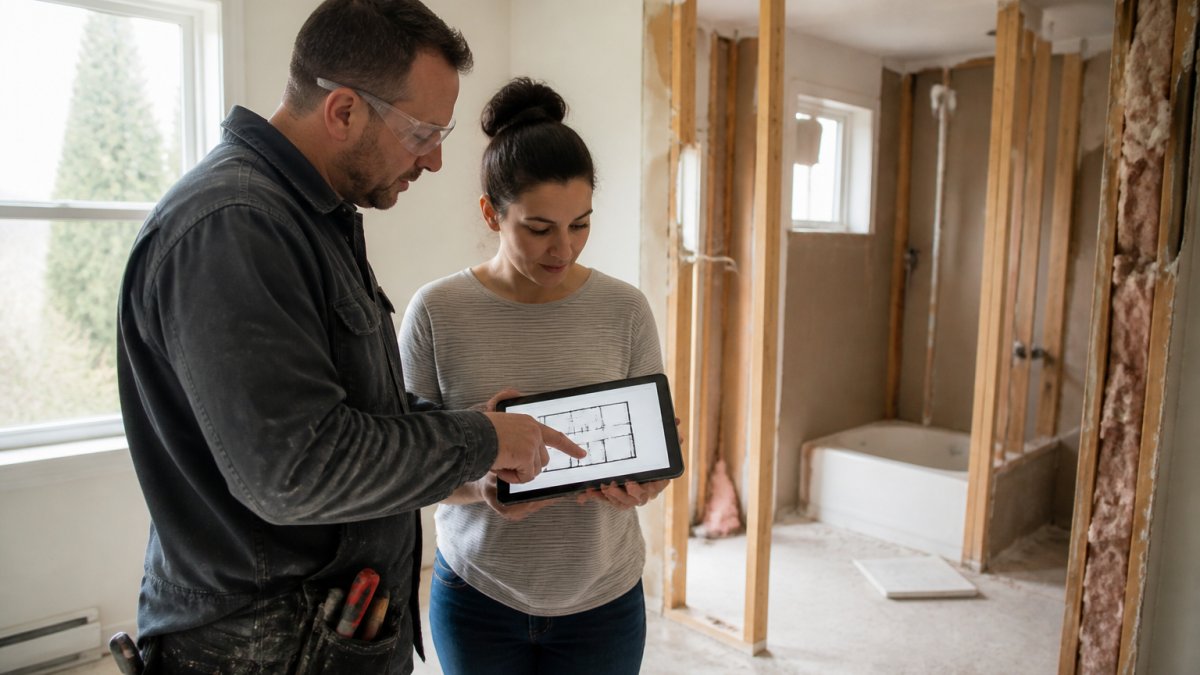
Full Bathroom Remodel vs Partial Renovation
A full bathroom remodel strips the room to the studs. It replaces waterproofing, plumbing rough-ins, electrical, flooring, and every fixture. A partial renovation keeps the existing layout and replaces surfaces and fixtures only: a vanity swap, new tile, a lighting upgrade.
The trade-off is honest. A full remodel costs more and takes longer, but it is the only way to correct hidden water damage or outdated plumbing.
Skipping a moisture check before a partial renovation is the most expensive shortcut in this trade. A failed shower pan or a slow supply-line weep can rot framing and subfloor for years before you see it, and by then the repair is a full remodel you did not plan for.
Planning Your Bathroom Renovation Timeline
A well-run bathroom renovation timeline runs 7 to 10 days for a typical full remodel when materials are on site and the scope is fixed. That is achievable, but only with sequencing discipline: demolition, rough-in inspection, waterproofing, tile, fixtures, then final details. The sequence is not arbitrary. Each phase depends on the one before it, and several phases have mandatory wait times that cannot be compressed without risking the finished result.
Here is how a 7-10 day sequence typically breaks down:
| Phase | Focus | Typical Duration |
|---|---|---|
| Demolition and prep | Remove fixtures, tile, drywall; protect the home | 1-2 days |
| Rough-in and inspection | Plumbing, electrical, permit inspection | 1-2 days |
| Waterproofing | Membrane and shower pan, cure time | 1-2 days |
| Tile installation | Floor and walls, grouting | 2-3 days |
| Fixtures and final details | Vanity, toilet, lighting, caulking, cleanup | 1-2 days |
Why the Sequence Matters More Than the Schedule
The order is fixed for good reasons. Demolition comes first because you cannot assess framing, subfloor, or existing plumbing until the walls are open. Rough-in comes next because plumbing and electrical lines must be in place and inspected before they are covered.
Two hold points routinely add time. The rough-in inspection must pass before walls close, and the waterproofing membrane needs its full cure time before tile.
What Can Push a Renovation Past Schedule
The most common cause of a blown schedule is not slow work. It is undiscovered damage. When a wall opens and the framing is wet, the clock stops while the repair is scoped and priced.
A common mistake homeowners make is approving a start date before materials are confirmed in hand. Confirm delivery dates in writing before demolition day, and ask your contractor how they schedule inspections so the project does not stall at a hold point.
Ask for a written phase schedule with inspection dates marked. A contractor who can show you where the hold points fall is managing the project; one who cannot is hoping nothing goes wrong.
What Drives Bathroom Renovation Costs and How to Budget
Bathroom renovation costs are driven by three things: the size of the room, how much of the plumbing and electrical layout changes, and the materials you select. Layout changes are the single biggest cost driver, because moving a drain or a supply line means opening floors and walls again.
Because every project differs, we do not publish flat pricing. We provide free quotes based on your actual space and scope, and we recommend getting your quote before you commit to a design. A useful budget structure looks like this:
- Demolition and disposal: removal, hauling, protecting the rest of the home
- Rough-in work: plumbing, electrical, permit and inspection fees
- Waterproofing: membrane, shower pan, sealing
That contingency line is not padding. It is the difference between a project that stays on budget and one that stalls mid-tile because an unexpected repair consumed the rest of the money.
Choosing Materials and Fixtures That Last
Material selection in this climate should be driven by moisture resistance first, appearance second. Porcelain and ceramic tile handle humidity well. Solid surfaces outperform veneer on vanities in a room that steams daily. For plumbing fixtures, look for cartridges and finishes that carry a real warranty, because a cheap faucet is a recurring repair.
Durability is the long-term saving. A material that costs more up front and lasts fifteen years beats one you replace in five.
Ask your contractor how they handle ventilation, not just finishes. A properly sized exhaust fan that vents outside, not into the attic, is what keeps a new bathroom from growing mold behind the tile in a damp coastal climate.
Questions to Ask a Bathroom Contractor Before You Hire
The right questions separate a bathroom contractor who manages projects from one who manages excuses. Ask these before you sign anything:
- How many projects do you run at once, and who is on site each day?
- What is your process when you find hidden water damage after demolition?
- Can you provide recent references from the last year or two, not just long-standing ones?
If a contractor cannot answer the damage question clearly, that is your answer. A defined process for surprises is the mark of a professional renovator.
How to Do a Bathroom Renovation Quote Comparison
A bathroom renovation quote comparison only works if you compare like for like. Line items vary wildly between providers, so normalize them before you decide. Build a simple comparison sheet with these rows and fill it in for each quote:
- Scope: full remodel or partial renovation, stated explicitly
- Demolition and disposal included or extra
- Waterproofing method and product named
The lowest number is rarely the best value. A quote that omits waterproofing detail or leaves permits to you is not cheaper; it has simply moved the cost and the risk onto your side of the table.
What a Bathroom Renovation Contract Should Include
A bathroom renovation contract should state the full scope, the fixed or hourly price basis, the payment schedule, the timeline, the warranty, and the change-order process. If any of those are missing, you have no recourse when something shifts.
Insist on a written change-order clause. It should describe how added work is priced and approved before it happens, so a mid-project discovery does not become an open-ended bill.
Permits, Inspections, and Condo Rules in North Vancouver
Most bathroom renovations require a permit when plumbing, electrical, or structural work is involved, and inspections follow at the rough-in and final stages. Requirements are set by the local authority and can change, so confirm current rules with the District of North Vancouver before work begins rather than relying on a contractor’s memory.
When a Permit Is Typically Required
A permit is generally triggered when the work touches systems that are regulated for safety: moving or adding plumbing supply or drain lines, relocating or adding electrical circuits or fixtures, removing or altering load-bearing structure, or changing the use of the space in a way that affects egress or ventilation. A cosmetic refresh that replaces a vanity in the same location, swaps a toilet for a like-for-like model, or retiles over sound existing surfaces often does not require a permit, but the only reliable answer comes from the authority having jurisdiction.
What Inspections Actually Check
Inspections are not a formality. The rough-in inspection verifies that plumbing and electrical work behind the walls meets code before it is covered. The final inspection confirms the completed work, including fixture connections, ventilation, and any required safety devices. If a contractor proposes to close walls before the rough-in inspection, that is a red flag. Once tile and drywall are in place, correcting a failed rough-in means undoing finished work.
Strata and Condo Requirements
If you live in a condo or strata, the rules layer on top of the permit. Strata bylaws commonly restrict working hours, elevator use for material delivery, and require approval before any alteration to plumbing or waterproofing, because a failed membrane in one unit becomes a claim against the corporation.
Shared plumbing adds a practical constraint. In many buildings, the drain stack and supply risers are common property, so any alteration to them needs strata consent and may require a licensed plumber familiar with the building’s system.
Two approvals gate every condo renovation: the municipal permit for the work itself, and the strata’s written consent for alterations. Missing either one can force you to undo finished work.
Accessibility is worth planning into the scope now, even if no one needs it yet. Blocking for future grab bars, a curbless shower entry, and a comfort-height toilet cost little during construction and are expensive to retrofit later. For families planning to age in place, this is the highest-value decision in the whole project.
Frequently Asked Questions
How do I choose a bathroom renovation contractor?
Start by confirming the contractor works regularly in North Vancouver and has done projects similar to yours, whether that is a full bathroom remodel or a partial renovation. Ask for recent references from the last year or two and actually call them. Verify licensing and liability insurance, and ask whether they carry coverage for water damage during demolition. Compare at least three written quotes that break down labour, materials, and allowances, not one lump sum. A contractor who answers questions about waterproofing, permits, and scheduling in specific terms is usually the safer choice.
What should I ask a bathroom contractor before hiring?
Ask who will be on site each day, how long the project will take, and what happens if hidden damage is found once walls are opened. Request a written scope that lists demolition, plumbing, waterproofing, tile installation, and final details. Confirm whether permits are included and who books inspections. Ask about cleanup, disposal, and whether the bathroom will be usable during the work. Finally, ask for the warranty terms in writing and how quickly they respond if something fails after completion.
How can I compare bathroom renovation quotes?
Line up each quote side by side and check that the scope matches. One quote may exclude tile, waterproofing membrane, or permit fees, which makes it look cheaper but is not comparable. Look at allowances for fixtures and finishes, because low allowances often mean extra charges later. Compare the proposed bathroom renovation timeline, payment schedule, and change-order process. The lowest number is rarely the best value if the scope is thinner or the schedule is unrealistic.
What should a bathroom renovation contract include?
A solid contract names the parties, the full scope of work, the materials and fixtures with brands or models, and the payment schedule tied to milestones rather than large upfront deposits. It should state the start and completion dates, how delays are handled, and the process for approving changes and their costs. Include warranty terms, insurance details, and who is responsible for permits and cleanup. Read it before signing and ask for anything unclear to be added in writing.
How long does a bathroom renovation usually take?
A straightforward bathroom renovation typically runs one to three weeks once work begins, though full remodels with layout changes and custom tile can take longer. The bathroom renovation timeline depends on scope, material lead times, inspection scheduling, and whether hidden water damage is found during demolition. Ask your contractor for a day-by-day sequence covering demolition, rough-in plumbing, waterproofing, tile, fixtures, and final details so you can plan around the disruption.
What permits might be needed for a bathroom renovation?
Permit requirements depend on the scope. Cosmetic updates like painting, replacing a vanity, or swapping fixtures in the same location often need no permit, while moving plumbing, adding electrical circuits, or changing structural elements usually do. In a condo, you also need strata approval before work starts. Ask your contractor who pulls the permit and who books inspections, and get that responsibility written into the contract so it does not fall through the cracks.
What should I do if a bathroom renovation is delayed?
First, check the contract for the agreed completion date and how delays are handled. Ask the contractor for a written revised schedule with reasons and new dates. Common causes include backordered materials, failed inspections, or hidden damage found during demolition. If the delay is due to the contractor’s scheduling, discuss remedies such as adjusted payments. Keep a record of all communication so you have documentation if the issue escalates.
How can I check a contractor’s references and credentials?
Ask for three recent references from projects similar to yours and call each one. Ask whether the project finished on schedule, how change orders were handled, and whether they would hire the contractor again. Check online reviews for patterns rather than single complaints. Confirm licensing and insurance directly with the contractor and request a certificate. A contractor with a long local history and verifiable recent work is far less risky than one who cannot provide either.
