
Table of Contents
- Why Waterproof Wall Panels Are Changing Bathroom Renovations
- Key Benefits of Waterproof Wall Panels: A Quick Comparison
- PVC vs Acrylic Shower Panels: Which Is Right for Your Bathroom?
- Maintenance Tips for Waterproof Wall Panels
- Bathroom Wall Panel Installation Cost: What to Expect
- Waterproof Wall Panels vs Traditional Tile: A Side-by-Side Look
- Installation Process: DIY vs Professional
- Environmental Impact and Sustainability of Wall Panels
- Frequently Asked Questions
Last Updated: October 4, 2026
Why Waterproof Wall Panels Are Changing Bathroom Renovations
Waterproof wall panels are large-format, non-porous coverings that replace tile in wet areas, and their rise in bathroom renovations comes down to one problem: moisture always wins eventually.
Traditional tile depends on grout and caulk to stay watertight, both porous, both shrinking and cracking over time.
Below, we break down the real benefits, compare panel materials, walk through installation and maintenance, and cover what most guides skip: substrate preparation, long-term structural integrity, and the true cost difference between hiring a professional and doing it yourself.
The single biggest advantage of waterproof wall panels is not the material itself. It is the elimination of grout, the one component in a tiled bathroom that fails first and causes the most expensive damage.
Key Benefits of Waterproof Wall Panels: A Quick Comparison
Waterproof wall panels deliver four core benefits: a non-porous surface, faster installation, lower long-term maintenance, and better hygiene because there is nowhere for mold and mildew to take hold.
| Benefit | What It Means in Practice | Why It Matters |
|---|---|---|
| Moisture resistance | Non-porous surface sheds water instead of absorbing it | Prevents mold, mildew, and rot behind the wall |
| Faster installation | Panels go over prepared substrates in large sheets | Less time without a working bathroom |
| Low maintenance | No grout to scrub, seal, or re-grout | Saves hours of cleaning every year |
| Hygiene | Grout-free surface has no crevices for bacteria | Easier to keep clean in a wet room or shower enclosure |
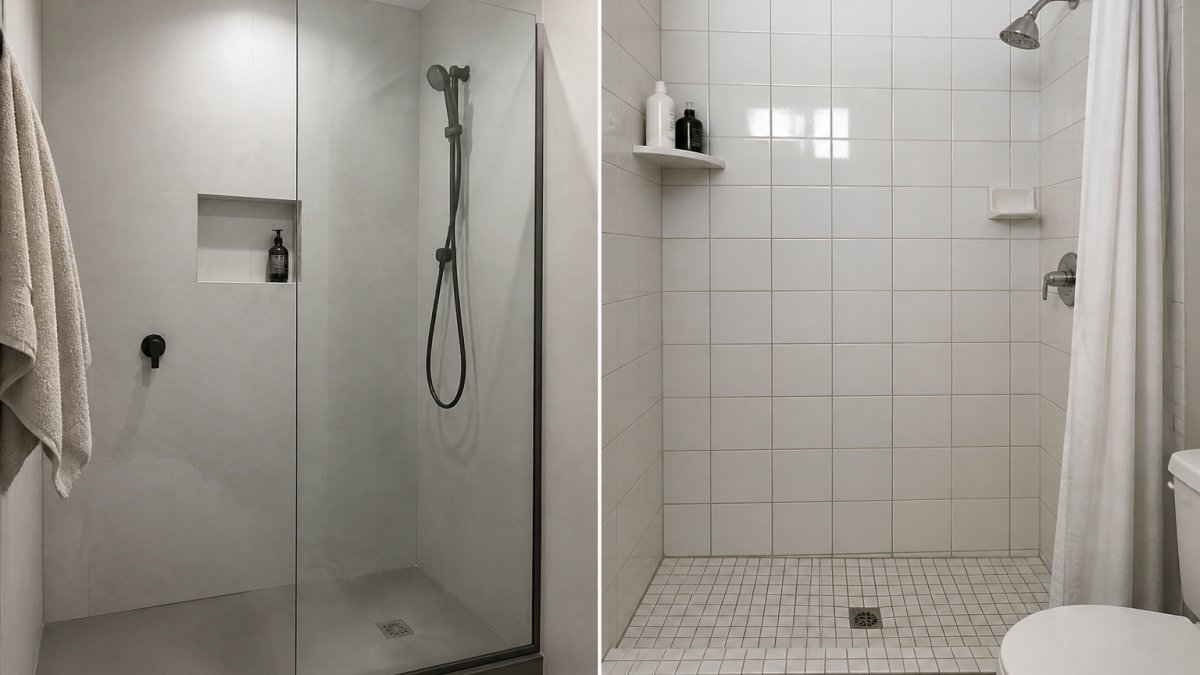
Moisture Resistance and Mold Prevention
Mold needs moisture, organic material, and a surface to grow on. Grout provides the organic material and the surface; waterproof wall panels provide neither, shedding water rather than soaking it in and removing the seams where mildew typically starts.
This matters most in a wet room or heavily used shower enclosure, where walls stay damp for hours. Provincial building codes treat moisture management as a core requirement in wet areas for good reason: trapped moisture damages framing and drywall long before it becomes visible.
Durability and Long-Term Performance
Good waterproof wall panels hold up for years without the cracking, staining, or lifting that plagues tile grout. Impact and scratch resistance vary by material: PVC resists warping, while WPC and SPC add rigidity and a more solid feel.
The thing nobody tells you about durability is that the panel is rarely the failure point. The substrate behind it is.
PVC vs Acrylic Shower Panels: Which Is Right for Your Bathroom?
PVC and acrylic are the two most common shower panel materials, and the choice comes down to budget, feel, and surface finish. PVC panels are cost-effective, lightweight, and easy to cut, a practical pick for a fast refresh or rental.
| Feature | PVC Panels | Acrylic Panels |
|---|---|---|
| Surface finish | Matte to semi-gloss | High-gloss |
| Impact resistance | Moderate | High |
| Weight | Light | Heavier |
| Best for | Budget refreshes, rentals | Spa-like primary bathrooms |
| Maintenance | Wipe clean | Wipe clean, avoid abrasives |
Neither option compromises on waterproofing, both are non-porous and grout-free. If you want the look of stone or tile without the maintenance, printed PVC and WPC panels now replicate those finishes convincingly.
When comparing panel materials, ask about the core, not just the surface. A thin decorative skin over a weak core will dent and flex. A denser core holds its shape and feels solid when you press on it, which is what separates a panel that lasts from one that looks tired in two years.
Maintenance Tips for Waterproof Wall Panels
Maintenance for waterproof wall panels is simple: wipe them down with a soft cloth and a mild, non-abrasive cleaner, and skip anything that scours the surface. But “low maintenance” is not the same as “no maintenance,” and the difference shows up in year eight, not year one.
Here is the realistic routine, split by weekly tasks versus annual inspections.
Weekly and monthly
- Rinse and squeegee after heavy use to reduce water spotting on gloss finishes
- Wipe with a soft cloth and mild, non-abrasive cleaner; avoid abrasive pads and harsh solvents
- Keep the exhaust fan running during and after showers to cut ambient humidity
Annually
- Check the sealant at the base, corners, and fixture penetrations and touch it up if it lifts
- Inspect caulk lines around the showerhead, valve, and any niche, since those joints still manage water even when the panels do not
- Look for soft spots, bubbling, or a hollow sound when you tap the wall, because those usually signal moisture behind the panel
What Actually Degrades Over 10+ Years
Most guides stop at “wipe it clean.” The honest long-term picture is more specific. The panel face itself rarely fails. What degrades is the system around it:
- Sealant joints. Silicone and hybrid sealants have a service life of roughly five to ten years depending on humidity, cleaning products, and movement. When they shrink or pull away, water reaches the panel edge, the one place a panel is vulnerable.
- Color fade. Cheaper printed finishes can fade or yellow under sustained UV and heat. Higher-grade panels with a UV-stable top layer hold their color far longer. This is a spec question, not a brand question.
- Joint separation. If panels were installed over a substrate that moves, expands, or was not flat, the joints can open slightly over time. A joint that opens by even a millimeter becomes a water path.
A common pattern among renovators is that panels installed over properly prepped, dry, flat substrates with quality sealant still perform well past the ten-year mark, while panels installed as a quick cover-up fail in three to five. The maintenance routine matters, but the install determines the ceiling.
Panels vs Tile: The Real Maintenance Difference
Compare that to tile, where grout needs sealing, scrubbing, and periodic re-grouting, and mold establishes itself in the grout lines within a couple of seasons in a busy shower. The maintenance difference alone is why many homeowners switch during a renovation. But if you want a surface that still looks sharp a decade in, the deciding factor is not the cleaning schedule, it is what went on the wall before the panel did.
Keep a spare panel or two from the original order. If a joint ever needs repair or a panel is damaged, a matching replacement from the same production run is far easier than sourcing a discontinued finish years later.
If you would rather not think about sealant life and joint inspection at all, that is exactly the kind of work a bathroom-renovator handles as part of a full renovation, and it is worth asking about during your quote.
Bathroom Wall Panel Installation Cost: What to Expect
Bathroom wall panel installation cost depends on the panel material, the size of the space, the condition of the existing walls, and whether you hire a professional or do it yourself. Here is what actually drives the cost, and where the DIY-versus-professional math really lands.
What Drives the Cost Up or Down
- Panel material. PVC sits at the lower end of the range, acrylic and premium WPC at the higher end. The spread between the cheapest and most expensive panel can be two to three times the material cost for the same wall area.
- Wall area. A full three-wall surround costs more than a single accent wall. Measure the actual square footage before comparing quotes.
- Substrate condition. Damaged drywall, water damage, or out-of-square walls add prep work. This is the single most underestimated line item.
DIY vs Professional: Where the Money Actually Goes
The temptation with panels is to assume DIY saves the entire labor cost.
What DIY saves
- The panel-setting labor itself, which is the fastest part of the job
- Scheduling flexibility, since you are not waiting on a crew
What DIY costs you
- Tool purchases or rentals: a quality wet saw or panel cutter, a laser level, and sealant tools
- Time: a confident homeowner on a simple layout can finish a single-wall project over a weekend, but a full surround with fixture cutouts typically takes several days of focused work
- Risk: a failed seal or a panel set over an uneven wall means removing and redoing the work, which erases the savings entirely
When professional installation is the better call
- Walls are uneven, out of square, or show any sign of existing water damage
- The project involves plumbing changes or fixture relocation
- The bathroom is the primary one in the home and cannot be out of service for long
A common pattern is that homeowners who DIY a simple accent wall come out ahead, while homeowners who DIY a full wet-room surround over questionable substrate end up paying twice. The break-even point is almost never the panel cost. It is the condition of the wall behind it.
Getting an Accurate Number
We do not publish flat figures because quoting a number without seeing the room leads to the budget surprises homeowners complain about most. A ballpark given over the phone is not a quote.
If you are also planning a bathroom vanity installation service or a broader bathroom renovation, bundle the scope into one quote so the substrate prep and sealing work are priced together rather than as separate change orders.
The most expensive mistake in a panel project is skipping substrate preparation to save money. Panels installed over damp or uneven walls trap moisture, and the failure shows up months later as bubbling, lifting, or mold. Fixing it means removing the panels and starting over, which costs more than the prep would have.
If you are searching for bathroom renovations near me and comparing quotes, ask each contractor the same three questions: how they handle substrate prep, what sealant they use at joints and penetrations, and what warranty covers the installation. The answers will separate a quote that holds up from one that does not.
Waterproof Wall Panels vs Traditional Tile: A Side-by-Side Look
Waterproof wall panels beat traditional tile on moisture resistance, maintenance, and installation speed. Tile wins on resale familiarity and design flexibility for intricate patterns.
| Factor | Waterproof Wall Panels | Traditional Tile |
|---|---|---|
| Moisture resistance | Non-porous, grout-free | Depends on grout and sealant |
| Maintenance | Wipe clean | Grout sealing and scrubbing |
| Installation time | Fast, large-format sheets | Slow, piece by piece |
| Mold and mildew risk | Low | Higher at grout lines |
| Leak prevention | Fewer seams, easier to seal | Many seams, more failure points |
| Aesthetic appeal | Wide range of printed finishes | Broad, authentic material look |
| Cost-effective over time | Lower maintenance cost | Higher long-term upkeep |
The honest trade-off: tile still carries resale prestige, and some buyers expect it. But for a bathroom that has to survive real daily use, panels reduce the number of things that can go wrong.
Installation Process: DIY vs Professional
DIY panel installation can work for a confident homeowner with the right tools and a simple layout.
Here is the process, step by step:
- Remove the old wall covering and inspect the substrate for moisture or damage
- Repair or replace damaged drywall and address any water intrusion at the source
- Ensure the wall is dry, flat, and square before anything goes up
- Install a moisture barrier where the assembly requires one
- Measure and cut panels to fit, accounting for fixtures and corners
- Apply adhesive and fix panels in place, working from a level reference line
- Seal joints, corners, and fixture penetrations with appropriate sealant
- Reinstall fixtures and finish trim, then clean and inspect
The DIY-versus-professional cost analysis is not just labor. A professional brings the substrate prep and leak prevention that determine whether the job lasts, the part a first-time installer most often underestimates.
We spec materials that hold up to the region’s moisture, complete most projects in 7-10 days, and back the work with a 1-year warranty.
Environmental Impact and Sustainability of Wall Panels
Waterproof wall panels have a mixed environmental profile that depends on the material and how long they stay installed.
The sustainability case for panels rests on longevity and waste reduction. A renovation that does not need re-grouting every few years avoids repeated material and chemical use.
For homeowners weighing options, the practical move is to choose a durable panel, install it correctly so it lasts, and dispose of old materials responsibly through local recycling or waste programs.
Frequently Asked Questions
What are the downsides of using waterproof wall panels?
Waterproof wall panels have few drawbacks, but some homeowners find they can look less custom than tile and may not suit every design style. High-quality panels can be more expensive upfront than basic ceramic tile. If not installed correctly, seams can allow moisture behind the panels. Choosing a professional installer and quality panels minimizes these risks. For many bathrooms, the benefits of faster installation, easier cleaning, and mold resistance outweigh the downsides.
How long do waterproof wall panels typically last in a bathroom environment?
Most waterproof wall panels last 10 to 20 years or more with proper installation and care. PVC and acrylic panels resist moisture, mold, and warping, so they hold up well in humid bathrooms. Longevity depends on panel quality, substrate preparation, and maintenance. Panels installed over a solid, dry substrate and sealed correctly at seams tend to last longer. Unlike tile, they won’t crack or have grout lines that degrade over time.
Do waterproof wall panels require professional installation?
While some panels are designed for DIY installation, professional installation ensures a watertight seal and proper substrate preparation. Mistakes like uneven walls or poor sealing can lead to leaks and mold. For a bathroom renovation in Vancouver or the surrounding areas, hiring an experienced renovator saves time and prevents costly rework. Professionals also handle plumbing adjustments and finishing details that affect durability and appearance.
How do waterproof wall panels prevent mold and mildew growth?
Waterproof wall panels prevent mold by creating a non-porous, grout-free surface where moisture cannot penetrate. Unlike tile and grout, which can harbor mold in tiny crevices, panels have smooth surfaces that dry quickly. Proper installation with sealed seams and a moisture barrier behind the panels further blocks water intrusion. Regular cleaning with mild soap keeps the surface hygienic and mold-free.
A bathroom renovation should not mean weeks of disruption, surprise costs, or a mess left behind. Bathroom Renovators has spent over 26 years renovating homes across the region, completing most projects in 7-10 days with custom designs tailored to your family, professional project management, and a 1-year warranty on the work. Get your free consultation and see how waterproof wall panels can give you a durable, low-maintenance bathroom without the stress.
