
Table of Contents
- Quick Comparison: 5 Best Materials for Moisture Resistant Bathrooms
- Porcelain and Ceramic Tile: The Best Bathroom Flooring for Moisture Resistance
- Moisture-Resistant Bathroom Wall Panels: Acrylic, Waterproof Panels, and Drywall Options
- Natural Stone and Engineered Quartz: Durability vs. Maintenance
- How to Prevent Mold in Bathroom Renovations: Ventilation, Vapor Barriers, and Sealing
- Cost and Sustainability: Weighing Long-Term Value Per Square Foot
- DIY vs. Professional Installation for Moisture-Resistant Materials
- Conclusion: Choosing the Right Materials for Your Bathroom
- Frequently Asked Questions
Last Updated: September 16, 2026
Quick Comparison: 5 Best Materials for Moisture Resistant Bathrooms
Choosing moisture resistant materials for a bathroom is a decade-plus decision. This guide from Bathroom Renovators covers the five options that hold up best against humidity, splashing, and condensation. The short version: porcelain tile wins for floors and wet zones, waterproof wall panels win for speed, and engineered quartz wins for vanities.
| Material | Best For | Moisture Resistance | Maintenance | Install |
|---|---|---|---|---|
| Porcelain tile | Floors, shower walls | Very high, low absorption | Low, seal grout | Pro |
| Ceramic tile | Walls, dry zones | High | Low | Pro or DIY |
| Acrylic and waterproof panels | Tub and shower surrounds | Very high, non-porous | Very low | Pro |
| Engineered quartz | Vanity tops | High, non-porous | Very low | Pro |
| Natural stone | Feature walls, vanities | Varies by stone | High, reseal often | Pro |
Porcelain and Ceramic Tile: The Best Bathroom Flooring for Moisture Resistance
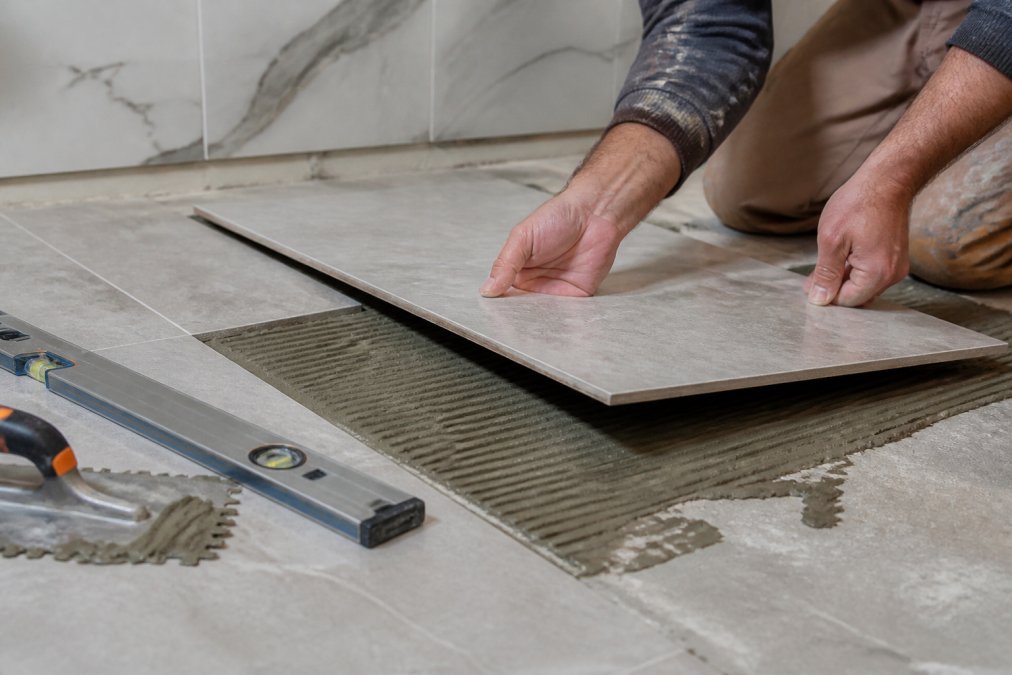
Porcelain tile is the best bathroom flooring for moisture resistance because its dense body absorbs very little water, so spills and steam stay on the surface. Ceramic performs well too, but it is softer and more absorbent, which matters most in showers and on floors.
Porcelain vs. Ceramic: Water Absorption Rates Compared
Water absorption rate separates these tiles, measured as a percentage of the tile’s dry weight:
- Porcelain has a water absorption rate of 0.5% or less, which is why it is rated for floors, showers, and anywhere water pools.
- Ceramic typically absorbs 0.5% to 3% or more. That is fine on a wall, where water runs off, but a liability on a floor or in a shower where water sits.
Matching Tile to Bathroom Zones
A bathroom is at least three environments, and the right tile changes by zone:
- Wet zone (inside the shower, tub surround, shower floor). Porcelain only, set over a proper waterproofing membrane. Look for a tile rated for floor use with a textured or matte finish, polished porcelain on a shower floor is a slip hazard.
- Damp zone (bathroom floor outside the shower, walls near the tub). Porcelain or a high-quality ceramic rated for floor traffic with sealed grout.
- Dry zone (walls away from the shower, backsplash, ceiling). Ceramic is fine and often the smart budget choice, since there is no standing water.
Grout Sealing and Tile Adhesive for Wet Zones
Grout and adhesive fail long before tile does, and this is where most tile jobs go wrong. Use a cement-based or epoxy grout rated for wet areas, then seal it once it cures. In showers, epoxy grout resists staining and mildew better and does not need resealing on the same cycle. Behind the tile, use a waterproof tile adhesive and a proper substrate, cement backer board or a foam tile backer, so movement and moisture do not crack the bond.
Large-format tile over a substrate that is not flat is another frequent failure. The tile looks fine at installation, then hollow spots and cracks appear within a year as the thin-set bridges the uneven surface. Check substrate flatness before setting, not after.
Where Each Tile Belongs: A Quick Decision Rule
If you remember one thing: porcelain for anything that gets wet and stays wet, ceramic for anything that only gets splashed.
Moisture-Resistant Bathroom Wall Panels: Acrylic, Waterproof Panels, and Drywall Options
Waterproof wall panels are the fastest way to a moisture resistant bathroom wall. Acrylic and composite panels are non-porous, wipe clean, and install over a prepared substrate in a fraction of the time tile takes, the practical pick for tub and shower surrounds.
Green Board, Purple Board, and DensShield Explained
These are moisture-resistant drywall products, not waterproof ones. Green board and purple board resist humidity and suit dry zones and ceilings away from direct spray. DensShield is a tile backer with a water-resistant core and coated surface, so it handles wet zones behind tile far better. None replaces a vapor barrier or waterproofing membrane in a shower, treat them as the substrate, not the waterproofing.
Using standard green board inside a shower enclosure is one of the most common renovation mistakes. It resists humidity but not direct water, and the paper facing can support mold once moisture gets behind the tile. The consequence shows up months later as soft drywall, cracked grout, and a repair bill that includes re-tiling.
Natural Stone and Engineered Quartz: Durability vs. Maintenance
Engineered quartz is the lower-maintenance choice for vanities and dry surfaces because it is non-porous and needs no sealing. Natural stone, including marble and granite, offers unmatched character but is porous, stains and etches more easily, and needs regular sealing against moisture and soap.
How to Prevent Mold in Bathroom Renovations: Ventilation, Vapor Barriers, and Sealing
Mold prevention starts with moving moisture out and keeping it from getting in. The three levers are ventilation, a vapor barrier, and sealing every penetration. Get these right during the renovation and you remove the conditions mold needs to grow.
- Ventilation: Install an exhaust fan sized to the room and run it during and after showers. Humidity levels should drop instead of lingering on the mirror and walls.
- Vapor barrier: Place it on the warm side of the wall assembly so condensation forms where it can drain, not inside the wall cavity.
- Sealing: Seal grout, caulk joints at the tub and shower base, and seal around fixtures and penetrations.
Run the exhaust fan on a timer for 15 to 20 minutes after every shower, not just while you are in the room. Most of the moisture is released as steam after you step out, and that is the window when condensation settles on cold surfaces.
Cost and Sustainability: Weighing Long-Term Value Per Square Foot
Most listicles stop at “porcelain costs more than ceramic.” What matters is installed cost per square foot, expected service life, and the annual cost of keeping the material waterproof.
Installed Cost Ranges by Material
These are typical installed ranges for a mid-market renovation, covering material, substrate prep, and labor. They are broad because substrate condition and regional labor rates swing the number, but they are the right order of magnitude for budgeting.
| Material | Installed cost per sq ft | Expected service life | Annual maintenance cost |
|---|---|---|---|
| Ceramic wall tile | $12-$25 | 20-30 years | Low (grout sealer every 2-3 years) |
| Porcelain tile | $18-$35 | 30-50 years | Low (grout sealer every 2-3 years) |
| Acrylic / waterproof panels | $25-$45 | 15-25 years | Very low |
| Engineered quartz (vanity) | $60-$120 | 15-25 years | Very low |
| Natural stone (marble/granite) | $40-$150+ | 20-50 years | High (reseal every 6-12 months) |
The Maintenance Multiplier
The purchase price is only part of the story. Natural stone is the clearest example: the slab may cost less than engineered quartz, but resealing twice a year plus etching from soap and hard water pushes the ten-year cost above quartz in most bathrooms.
Sustainability: Durability Is the Greenest Spec
On environmental impact, the durable options win by default. A material that lasts 30 years has a far lower lifetime footprint than a cheaper one you rip out in five, because bathroom demolition waste, tile, drywall, adhesives, is heavy and hard to divert. The greenest spec is usually the one you never have to redo.
Beyond lifespan, look for three things:
- Recycled content in tile. Many porcelain and ceramic lines now include pre-consumer recycled material, and some manufacturers publish the percentage. It does not change performance.
- Low-VOC adhesives, grouts, and sealants. These matter for indoor air quality in a small, poorly ventilated room. Look for products that meet low-emission standards.
- Recyclable panel composites. Acrylic and composite wall panels are increasingly made with recyclable content, and their lightweight construction means less material shipped per square foot of finished wall.
When comparing quotes, ask each contractor for the installed cost per square foot including substrate prep and waterproofing, not just the tile price. The gap between the two numbers is where budgets actually break.
DIY vs. Professional Installation for Moisture-Resistant Materials
Some of these materials are genuinely DIY-friendly. Most are not, once waterproofing is involved. Acrylic panels and ceramic wall tile in a dry zone are within reach for a confident homeowner. Porcelain floors, shower waterproofing, vapor barriers, and stone installation are not, and getting them wrong is expensive.
Here is how to decide:
- DIY if the surface is a dry zone, the material is surface-mounted, and there is no waterproofing membrane to build.
- Hire a professional if the work involves a wet zone, a shower base, a vapor barrier, or heavy tile and stone.
- Always hire out anything behind the wall. The waterproofing you cannot see is what protects everything you can.
The material you choose matters less than how well it is installed. A mid-range porcelain tile set over correct waterproofing will outperform premium stone installed over a compromised substrate every time.
Conclusion: Choosing the Right Materials for Your Bathroom
The hard part is not picking a material. It is matching each material to the right zone and installing it so it performs, exactly where most renovation projects go wrong. Bathroom Renovators specs materials that hold up to local humidity, completes most projects in 7-10 days, and backs the work with a 1-year warranty. With over 26 years of experience and a focus on durable, moisture resistant results, we handle waterproofing, ventilation, and finishing as one job so nothing gets missed between trades.
Health Canada information on indoor air quality and mold
Natural Resources Canada on energy-efficient ventilation and exhaust fans
Frequently Asked Questions
What is the most moisture-resistant material for bathroom walls?
Porcelain tile and waterproof wall panels (acrylic or PVC) offer the highest moisture resistance for bathroom walls. Porcelain has a water absorption rate below 0.5%, making it nearly non-porous. Acrylic panels eliminate grout lines entirely, removing the most common entry point for water. For a budget-friendly option, DensShield or purple board provides a moisture-resistant substrate under tile, but these still require a vapor barrier and proper sealing at seams and corners.
Are porcelain tiles better than ceramic for bathroom moisture?
Porcelain tiles outperform ceramic in wet areas because they are denser and have a water absorption rate under 0.5%, compared to ceramic’s 0.5% to 3%. This matters in showers and floors where standing water is common. Ceramic works fine on dry-zone walls, but porcelain is the safer choice for bathroom flooring and wet zones. Both need sealed grout to prevent moisture from reaching the substrate.
How do I prevent mold growth in a bathroom renovation?
Preventing mold during a bathroom renovation starts with a proper vapor barrier behind the substrate, sealed grout and silicone at all joints, and a correctly sized exhaust fan vented to the exterior. Use moisture-resistant drywall or cement board in wet zones, not standard drywall. Keep indoor humidity levels below 60% and run the fan for 15 to 20 minutes after showers. Fix any leaks immediately, since mold can begin growing within 24 to 48 hours of sustained moisture exposure.
What are the best waterproof flooring options for bathrooms?
Porcelain tile, luxury vinyl plank (LVP), and engineered quartz are the top waterproof flooring options for bathrooms. Porcelain is the most durable and water-resistant, with a near-zero absorption rate. LVP handles splashes well and is warmer underfoot, but standing water can seep into seams over time. Engineered quartz works for vanities but is not recommended as a floor material because it can be slippery when wet. Proper substrate preparation and sealed seams are essential regardless of which material you choose.
