
Table of Contents
- Why Durable Bathroom Fixtures Matter in High-Traffic Homes
- Best Bathroom Faucet Finishes for Durability
- Material Selection for Long-Lasting Plumbing Fixtures
- Signs of Low-Quality Bathroom Hardware to Avoid
- How to Maintain Bathroom Plumbing Fixtures
- Selecting Fixtures That Fit Your Renovation Budget
- Warranty and Long-Term Support for Peace of Mind
- Frequently Asked Questions
Last Updated: September 19, 2026
Why Durable Bathroom Fixtures Matter in High-Traffic Homes
High-traffic bathrooms face constant stress from daily use. Taps turned on and off dozens of times, temperature swings, and water pressure all compound wear. Poor-quality materials fail predictably: leaks damage walls, finishes corrode, and hardware stops working.
Choosing durable bathroom fixtures prevents costly damage and maintains functionality for years. The difference between a fixture lasting 5 years and one lasting 15 comes down to material selection, finish quality, and valve construction. A $200 faucet failing after three years costs more in replacement and water damage than a $400 fixture performing reliably for a decade. At Bathroom Renovators, we specify materials that hold up to heavy daily use and moisture exposure.
The stakes are higher in homes with kids or moisture issues. A leaking cartridge valve wastes thousands of litres and damages cabinetry. A corroded finish signals underlying material compromise. This guide covers material choices and maintenance practices for demanding environments.
Best Bathroom Faucet Finishes for Durability
Solid Brass and PVD Coatings
Solid brass is the gold standard for faucet bodies, it resists corrosion and naturally repels moisture, making it ideal for high-traffic bathrooms with constant humidity and splash exposure.
PVD (physical vapor deposition) coatings create a molecular bond with brass, resisting corrosion far better than traditional electroplating. PVD-coated brass faucets maintain appearance for 10+ years with minimal maintenance, while cheaper plated finishes tarnish within 2-3 years.
Verify solid brass construction by weight and material specifications. Lightweight faucets use brass-plated zamak or aluminum, which corrode quickly when plating wears through. Solid brass density provides superior durability in moisture-rich environments.
When shopping, ask for the faucet body material explicitly. Reputable manufacturers list “solid brass” on product specifications. Avoid vague descriptions like “brass-finish” or “brass-plated”, these typically hide inferior base metals.
Polished Chrome vs. Brushed Nickel
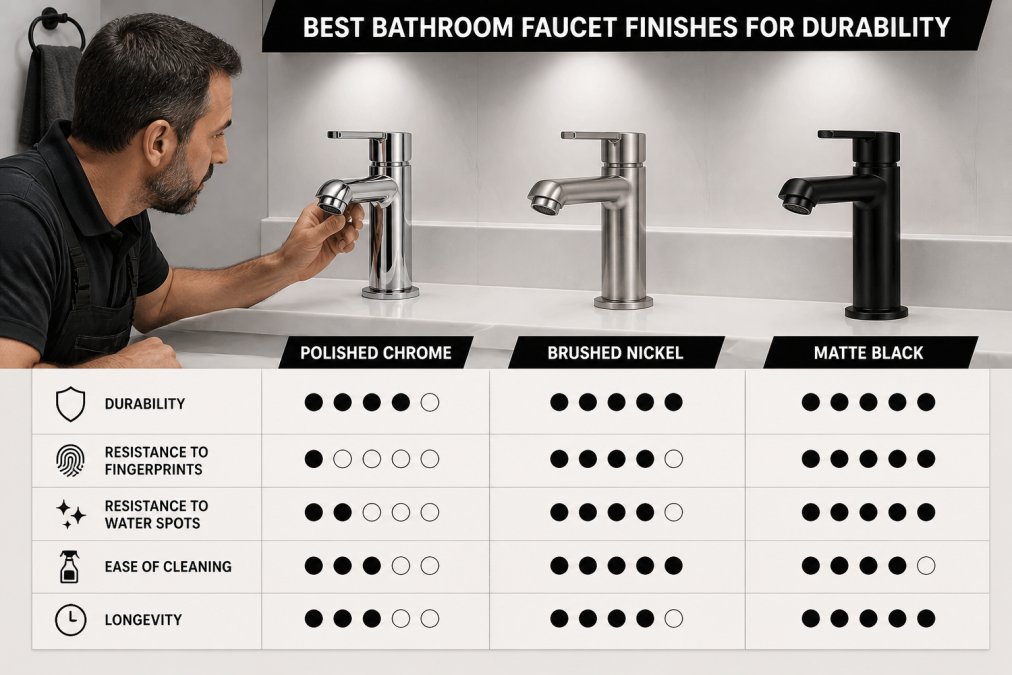
Polished chrome delivers a high-shine finish but requires frequent wiping, water spots and fingerprints show immediately. High-traffic bathrooms need weekly cleaning to maintain appearance.
Brushed nickel offers a forgiving matte finish that hides water spots, fingerprints, and minor scratches better than polished chrome. It maintains a clean appearance with less frequent maintenance.
Both finishes are durable over solid brass with proper PVD technology. High-traffic bathrooms with kids suit brushed nickel better because it forgives daily use without constant polishing.
Tarnish-Free and Corrosion-Resistant Options
Matte black and oil-rubbed bronze finishes offer durability advantages, they hide water spots and mineral deposits better than chrome or nickel, a significant benefit in hard-water homes.
Matte black finishes use PVD coatings that resist corrosion and mask water stains. They require less frequent cleaning than polished chrome while maintaining contemporary aesthetics.
Stainless steel finishes provide excellent corrosion resistance, particularly in bathrooms with high moisture exposure or water quality issues. Stainless steel doesn’t tarnish the way traditional chrome can, and it resists rust from mineral-heavy water. The investment in stainless fixtures pays dividends in homes where water quality is poor or humidity is consistently high.
Material Selection for Long-Lasting Plumbing Fixtures
Stainless Steel for Moisture Exposure
Stainless steel resists corrosion from moisture and minerals through a protective oxide layer. In high-traffic bathrooms with relentless humidity, stainless steel components significantly extend fixture lifespan.
Stainless steel works well for exposed hardware like towel bars, grab bars, and shower trim rings that face constant moisture exposure. Many moisture-prone renovations specify stainless steel trim to avoid maintenance headaches.
Stainless steel costs 20-30% more than standard finishes, but the durability advantage justifies the investment in high-traffic homes by reducing replacement frequency and water damage risk.
Ceramic Disc Valves for High-Traffic Use
Ceramic disc cartridge valves eliminate the wear that rubber washers experience. In high-traffic bathrooms, ceramic disc valves maintain consistent performance for 10+ years.
Rubber washer cartridges fail predictably, the rubber compresses, hardens, and cracks from repeated use and temperature cycling. Ceramic disc valves avoid this degradation entirely.
Many homeowners notice that faucets with ceramic disc valves maintain consistent water pressure and temperature control far longer than those with washer cartridges. The initial cost difference is modest, typically $30-50 more per faucet, but the extended lifespan and reduced maintenance make ceramic valves the practical choice for high-traffic homes.
Ceramic disc valves outlast rubber washers by 5-7 years in high-traffic applications. The reliability improvement justifies the modest upfront cost difference.
Signs of Low-Quality Bathroom Hardware to Avoid
Low-quality fixtures display predictable failure patterns. Lightweight faucets that feel hollow when handled typically use zamak or aluminum bases instead of solid brass. These materials corrode quickly, and the plating fails within 2-3 years, exposing discolored or pitted base metal underneath.
Cheap finishes tarnish rapidly. If a fixture shows water spotting or discoloration within the first few months of use, the coating lacks adequate thickness or adhesion. Proper PVD finishes maintain appearance through years of exposure; finishes that deteriorate quickly signal inadequate surface treatment.
Poor water pressure consistency indicates a low-quality cartridge valve. Faucets that deliver inconsistent flow or temperature, or that drip shortly after installation, contain inferior internal components. High-traffic bathrooms amplify these problems, a marginal cartridge fails faster when used constantly.
Plastic or rubber components in visible trim areas suggest cost-cutting. Handles, aerators, and trim rings should use metal construction. Plastic degrades from UV exposure and temperature cycling, becoming brittle and prone to breaking. Metal components maintain functionality and appearance through years of use.
Avoid fixtures without clear material specifications. Reputable manufacturers document whether components are solid brass, stainless steel, or ceramic. Vague descriptions or missing specifications often hide inferior materials. When a manufacturer won’t clearly state what a fixture is made from, the material choice likely reflects cost reduction rather than durability.
How to Maintain Bathroom Plumbing Fixtures
Weekly and Monthly Care Routines
Weekly cleaning prevents mineral buildup that accelerates corrosion. Hard water deposits accumulate quickly on chrome and nickel finishes, requiring regular removal to maintain appearance. A soft cloth with white vinegar dissolves mineral deposits without scratching the finish. Wipe fixtures weekly to prevent buildup that becomes difficult to remove.
Monthly deep cleaning addresses mineral deposits in aerators and cartridge housings. Remove the aerator screen (the small mesh component at the faucet outlet) and soak it in white vinegar for 30 minutes to dissolve mineral blockages. This simple maintenance prevents the reduced water flow that signals internal mineral accumulation.
Check for visible leaks monthly. A single dripping faucet wastes 3,000+ litres annually. Early detection and cartridge replacement prevent water damage and excessive utility costs. Listen for unusual sounds, grinding or squealing often indicates internal valve problems that worsen with continued use.
Inspect caulk and sealant around fixtures quarterly. Gaps in caulk allow water to penetrate behind trim and reach wood framing. Re-caulk any gaps to prevent moisture damage. This simple maintenance prevents expensive structural repairs that result from water infiltration.
Water Quality Impact on Fixture Longevity
Hard water accelerates corrosion and mineral buildup inside fixtures. High mineral content deposits scale inside cartridges, reducing flow and eventually causing failure. In areas with very hard water, fixtures experience 30-40% shorter lifespan than in soft water regions. Understanding your water quality helps predict maintenance needs and fixture replacement timing.
Water softening systems extend fixture lifespan significantly. Homes with water softeners avoid mineral accumulation inside valves and maintain consistent water pressure. The investment in a water softening system pays dividends through reduced fixture maintenance and extended hardware life.
Selecting Fixtures That Fit Your Renovation Budget
Fixture selection requires balancing durability investment against total renovation cost. A bathroom renovation typically allocates 15-25% of budget to plumbing fixtures. Within that allocation, spending more on faucet and valve quality delivers measurable returns through extended lifespan and reduced maintenance.
| Fixture Type | Budget Option | Mid-Range | Premium | Expected Lifespan |
|---|---|---|---|---|
| Faucet | $100-150 | $250-400 | $500+ | 5-7 years |
| Shower valve | $80-120 | $200-350 | $450+ | 5-8 years |
| Cartridge replacement | $15-30 | $40-80 | $80-150 | N/A |
Warranty and Long-Term Support for Peace of Mind
Warranty coverage signals manufacturer confidence in fixture durability. Premium fixtures typically include 5-10 year warranties covering defects and leaks. Budget fixtures often carry only 1-2 year warranties, reflecting expected lifespan. A comprehensive warranty provides protection against premature failure and ensures manufacturer support if problems arise.
Fixtures installed by inexperienced contractors often fail prematurely due to improper cartridge installation, incorrect pressure balancing, or inadequate sealing. Poor installation voids warranties and creates water damage risk. Professional installation protects your fixture investment.
Frequently Asked Questions
What are the most durable bathroom faucet finishes for busy homes?
PVD-coated finishes and solid brass offer the best durability in high-traffic bathrooms. Polished chrome and brushed nickel resist corrosion and scratches well, but PVD finishes last longer by preventing tarnishing and oxidation. Ceramic disc valves inside the faucet handle wear better than traditional cartridges when used frequently. Stainless steel fixtures also perform well in moisture-heavy environments.
How do I maintain bathroom plumbing fixtures to extend their lifespan?
Clean fixtures weekly with a soft cloth and mild soap to prevent mineral buildup. Dry them immediately after use to reduce water spotting and corrosion. Check gaskets and seals monthly for leaks, and replace them if worn. For hard water areas, use a water softener or install aerator screens to reduce sediment. Avoid harsh chemicals that damage finishes, stick to non-abrasive cleaners.
What are signs of low-quality bathroom hardware I should avoid?
Watch for thin plating that shows base metal underneath, loose handles that rattle after light use, and poor valve quality that causes inconsistent water pressure or leaks. Low-end fixtures often use plastic or thin brass instead of solid brass bodies. Check if the faucet cartridge is replaceable, quality fixtures allow you to swap cartridges without replacing the entire faucet. Avoid products with no warranty or unclear material specifications.
Are ceramic disc valves really better for high-traffic bathrooms?
Yes. Ceramic disc valves handle frequent on-off cycles better than traditional cartridge valves because the ceramic discs resist wear from constant movement. They’re less prone to leaking after years of heavy use and require fewer repairs. In high-traffic homes where the shower or sink runs dozens of times daily, ceramic disc technology extends fixture lifespan by 5-10 years compared to standard cartridges.
