
Last Updated: October 23, 2026
Quick Summary
Layer bathroom lighting for better visibility by combining three types: ambient lighting that fills the entire room evenly, task lighting focused at the vanity mirror, and accent lighting that adds character. This three-layer approach eliminates shadows on your face during grooming and creates a functional, inviting bathroom.
- Mount vanity sconces at eye level, approximately 152 to 168 cm from the floor, spaced 60 to 75 cm apart on either side of the mirror
- Space recessed downlights 1.2 to 1.8 meters apart across the ceiling for even ambient illumination without dark spots
- Use warm color temperature (2700K to 3000K) for vanity lighting to flatter skin tones and create a relaxing atmosphere
- Install separate switches for each lighting layer to adjust brightness based on activity and time of day
- Use damp-rated fixtures in vanity areas and wet-rated fixtures in shower enclosures to ensure safety and durability
Table of Contents
- Understanding the Three Layers of Bathroom Lighting
- Bathroom Vanity Light Placement for Shadow-Free Grooming
- Creating Your Bathroom Lighting Layout
- Choosing the Right Bathroom Lighting Color Temperature
- Bathroom Lighting Fixture Safety Ratings and Wet-Area Requirements
- Controls, Dimmers, and Switching for Flexibility
- Common Lighting Mistakes to Avoid
- Conclusion
- Frequently Asked Questions
Understanding the Three Layers of Bathroom Lighting
How to layer bathroom lighting for better visibility starts with understanding what each layer does. Think of it like building a house: you need a solid foundation, walls that support the structure, and finishing touches that make it beautiful. Bathroom lighting works the same way.
The three layers are ambient, task, and accent lighting. Ambient lighting is your foundation. It fills the entire room with even illumination. Task lighting is focused where you actually need to see clearly, like at the vanity mirror.
Most bathrooms fail because they rely on a single overhead light. One fixture can’t handle all three jobs at once. You end up with shadows on your face when grooming or a space that feels flat and uninviting. Layered lighting transforms how people experience their bathrooms.
Ambient Lighting: Your Foundation
Ambient lighting provides general illumination throughout the bathroom. This is your baseline brightness level. Without it, the room feels dark and cave-like even with task lights on.
The best ambient lighting comes from recessed downlights spread evenly across the ceiling. They’re clean, unobtrusive, and distribute light uniformly. Aim for fixtures spaced about 1.2 to 1.8 meters apart. This prevents dark spots and creates balanced visibility everywhere.
LED recessed downlights are ideal because they’re energy-efficient and long-lasting. According to the Canadian Electrical Code, fixtures used in bathrooms must meet specific safety standards. Choose fixtures rated for damp or wet locations if your bathroom has high humidity or moisture. This matters in bathrooms where steam from showers and baths is constant.
Task Lighting: Where You Need It Most
Task lighting is focused illumination where you perform specific activities. In bathrooms, the primary task area is the vanity mirror. This is where grooming happens, and poor lighting here is frustrating and unflattering.
Task lighting at the vanity needs to be bright enough to see clearly but not so intense it creates glare. Most experts recommend 50 to 100 lumens per square foot in this zone. The light should reach your face evenly, without shadows under the eyes or chin.
Vertical lighting, wall sconces on either side of the mirror, is considered the gold standard for task lighting. This angle mimics natural light and eliminates the shadows that overhead-only lighting creates. The fixtures should be mounted at eye level, typically 152 to 168 cm from the floor.
Accent Lighting: The Finishing Touch
Accent lighting adds character and depth to your bathroom. It highlights architectural features, creates visual interest, and makes the space feel intentional rather than purely functional.
Common accent lighting choices include LED strip lighting under floating vanities, inside glass shelves, or along wall niches. Accent lighting is typically dimmer than ambient and task lighting, used to draw attention to specific areas. It’s the layer that transforms a bathroom from ordinary to spa-like.
Accent lighting also serves a practical purpose. It helps you navigate the bathroom safely at night without turning on all the overhead lights. A soft glow around the floor or along the wall provides enough visibility without jarring brightness.
Each lighting layer serves a distinct purpose in creating a well-lit, functional bathroom.
| Lighting Layer | Primary Purpose | Best Application |
|---|---|---|
| Ambient | Fills entire room with even illumination | Recessed downlights spaced 1.2 to 1.8 meters apart |
| Task | Focused light for specific activities | Vanity mirror with side sconces at eye level |
| Accent | Adds character and visual interest | LED strips under vanities or along wall niches |
Bathroom Vanity Light Placement for Shadow-Free Grooming
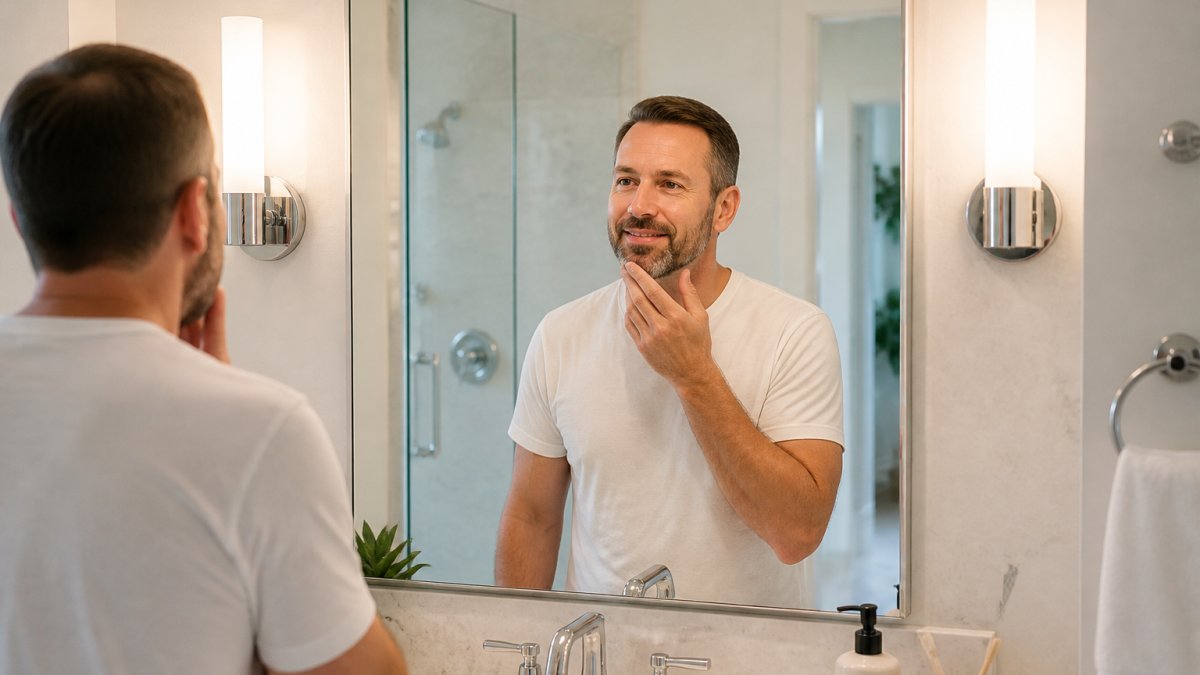
Shadow-free grooming depends entirely on fixture placement. The wrong placement creates unflattering shadows that make shaving, makeup application, and other grooming tasks difficult. The right placement bathes your face in even, flattering light.
This is where most bathrooms go wrong. A single overhead fixture creates a shadow under your chin and nose. Side sconces fix this problem completely because light comes from the sides, not above. The result is even illumination across your entire face.
Side Sconces: The Gold Standard
Side sconces mounted on either side of the mirror are the most effective vanity lighting setup. Light from both sides eliminates shadows and provides the most flattering illumination for grooming tasks.
Mount sconces at eye level, approximately 152 to 168 cm from the floor. Learn more about how to choose bathroom vanity lighting fixtures that work best for your space.
The fixtures should project light forward and slightly downward. Avoid sconces that shine light upward or directly into your eyes. Frosted or diffused shades reduce glare and create softer, more pleasant light.
Choose sconces with warm color temperature (2700K to 3000K) for a flattering appearance. Cool white light (4000K or higher) can look harsh and unflattering for grooming. The warmer tone is more forgiving on skin and creates a more inviting bathroom environment.
Over-Mirror and Overhead Options
Over-mirror lighting is an alternative when wall space is limited or when you prefer a more minimalist look. A light bar mounted directly above the mirror works, but it’s less ideal than side sconces because it still creates some shadows below the eyes.
If you use over-mirror lighting, pair it with side sconces for the best results. The combination provides fill light from above and key light from the sides. This layered approach eliminates virtually all shadows.
Overhead recessed downlights alone are insufficient for vanity tasks. They create shadows on your face and make grooming difficult. Use them only as part of your ambient lighting layer, not as your primary vanity light.
Creating Your Bathroom Lighting Layout
A successful bathroom lighting layout starts with mapping your zones.
Create a simple sketch of your bathroom. Mark the vanity, mirror, shower, and toilet. Note the ceiling height and any architectural features.
For vanity areas, plan side sconces first. Then add ambient lighting with recessed downlights. Finally, consider accent lighting if budget and design allow.
For shower areas, install waterproof or wet-rated recessed downlights above the shower enclosure. This provides task lighting for showering and bathing.
For toilet areas, ambient lighting from your ceiling fixtures usually suffices. You don’t need dedicated task lighting here unless you prefer additional brightness.
For circulation areas (hallways between zones), ambient lighting provides adequate visibility. Accent lighting along the floor or walls improves nighttime navigation.
Choosing the Right Bathroom Lighting Color Temperature
Color temperature affects how your bathroom looks and feels. It’s measured in Kelvin (K). Lower numbers (2700K-3000K) are warm and yellow. Higher numbers (4000K-5000K) are cool and blue.
For vanity lighting, warm color temperature (2700K-3000K) is most flattering for skin tones and creates a relaxing atmosphere.
For ambient lighting, 3000K is a good middle ground. It’s warm enough to feel comfortable but bright enough to provide adequate general illumination.
For task-heavy areas like the shower, slightly cooler light (3500K-4000K) improves visibility and makes it easier to see details.
Avoid very cool light (5000K or higher) in bathrooms unless you specifically want a clinical appearance. It can feel harsh and uninviting, especially in small spaces.
Bathroom Lighting Fixture Safety Ratings and Wet-Area Requirements
Bathroom lighting fixtures must meet specific safety standards because moisture is present. Choosing the wrong fixture rating can create safety hazards and lead to premature failure.
Fixtures are rated by location: dry, damp, or wet. Dry locations have no moisture exposure. Damp locations experience occasional moisture (like a bathroom counter away from the shower).
For bathroom vanity areas, damp-rated fixtures are typically sufficient. These are marked with a UL or CSA rating for damp locations. They can handle bathroom humidity and occasional splashing.
For shower enclosures and areas that receive direct water spray, wet-rated fixtures are required.
Check the fixture label for the damp or wet rating. It should be clearly marked on the packaging or the fixture itself. If you’re unsure, ask your retailer or contractor. The Canadian Standards Association provides electrical safety standards for fixtures.
Controls, Dimmers, and Switching for Flexibility
Separate switching for each lighting layer gives you maximum flexibility and control. You can adjust brightness based on the time of day, activity, or mood.
Install separate switches for ambient, task, and accent lighting. This allows you to use task lighting alone for morning grooming without turning on all the lights.
Dimmer switches add even more flexibility. They let you adjust brightness from full intensity down to a soft glow.
For vanity task lighting, consider a dedicated dimmer. This lets you adjust brightness for different grooming tasks or times of day.
Motion sensors or timers are useful for powder rooms or guest bathrooms.
Install switches in convenient locations. Vanity task lighting should have a switch near the mirror or vanity. Ambient lighting switches go near the bathroom entrance.
Common Lighting Mistakes to Avoid
The most common mistake is relying on a single overhead fixture. One light can’t provide ambient, task, and accent lighting simultaneously.
Another frequent error is mounting vanity sconces too high or too far apart.
Using the wrong color temperature is also common. Cool white light (5000K) in a vanity area looks harsh and unflattering.
Many people skip accent lighting to save money, then regret it.
Failing to use damp or wet-rated fixtures in moisture-prone areas is a serious mistake.
Insufficient ambient lighting makes the space feel dark and cave-like. Recessed downlights spaced 1.2 to 1.8 meters apart provide even coverage.
Not planning switching and controls ahead of time is frustrating. You end up with lights you can’t easily control or adjust.
Conclusion
Creating a well-lit bathroom transforms how you experience this essential space every day.
If you’re planning a bathroom renovation or refresh, professional lighting design and installation make a significant difference. Get a free consultation with Bathroom Renovators to discuss your lighting needs and create a custom plan tailored to your space and lifestyle.
Frequently Asked Questions
Where should bathroom vanity lights be placed for the best results?
Vanity lights work best when mounted on either side of the mirror at eye level, typically 152 to 168 cm from the floor. This placement eliminates harsh shadows on your face during grooming. If side sconces aren’t possible, position lights above the mirror or use a light bar across the top. The key is ensuring light reaches your face from multiple angles rather than casting shadows from overhead alone.
How do you layer lighting in a bathroom effectively?
Layered bathroom lighting combines three types: ambient lighting for overall visibility (recessed downlights or ceiling fixtures), task lighting for specific areas like the vanity (sconces or light bars), and accent lighting for visual interest (LED strips or decorative fixtures). Start with ambient as your base, add task lighting where you perform grooming or other activities, then introduce accent lighting to enhance the space. This approach gives you flexibility to adjust brightness for different times of day.
What color temperature should bathroom lighting be?
Bathroom lighting typically works best in the 3000K to 4000K range. Warmer light at 3000K creates a relaxing spa-like feel, while 4000K provides cooler, more neutral illumination that’s ideal for makeup application and shaving. Choose based on your bathroom’s purpose: warmer for a relaxation focus, cooler for functional grooming tasks. Many homeowners install dimmers to switch between warm and cool tones depending on the time of day or activity.
Do I need special fixtures for bathroom lighting over wet areas?
Yes. Fixtures in shower enclosures and directly above bathtubs must be rated for wet locations and meet electrical safety standards. Look for fixtures labeled as damp-rated or wet-rated depending on their proximity to water. Recessed lights over showers need appropriate gaskets and sealing. Vanity area fixtures can typically be damp-rated. Always consult local electrical codes or work with a professional renovator to ensure your fixtures meet safety requirements for your specific bathroom layout.

