
Table of Contents
- Start With a Realistic Bathroom Remodel Cost Breakdown
- Keep the Layout and Save on Plumbing and Tile
- Refinish Before You Replace Fixtures and Fittings
- Build a Contingency Fund Before Demolition Starts
- Weigh DIY Against Professional Bathroom Vanity Installation Services
- Plan Disabled Bathroom Renovations as a Phased Project
- Choose Upgrades That Pay Back at Resale
- How a Bathroom Reno Vancouver Homeowners Trust Stays on Budget
- Frequently Asked Questions
Last Updated: October 2, 2026
Start With a Realistic Bathroom Remodel Cost Breakdown
A bathroom renovation budget is a written plan that splits your total spend across materials, labor, fixtures, and a cushion for surprises. Most projects run over because homeowners guess at that split instead of building it. At Bathroom Renovators, we’ve spent over 26 years renovating homes, and we understand where money actually goes. The pattern is often the same: labor and hidden prep can eat the money people thought they’d spend on tile.
So before you pick a single finish, build the breakdown.
Where the Money Actually Goes
A typical bathroom remodel cost splits into a few big buckets. Labor for plumbing, electrical, and tiling usually takes the largest share. Materials come next: tile, grout, waterproofing, and drywall. Fixtures and fittings, meaning the toilet, sink, tub, and taps, sit in the middle.
Write your own list in that order. It keeps you honest about what’s fixed and what flexes.
Fixed Costs vs. Costs That Move
Some numbers you can lock early. Others drift once demolition starts.
- Fixed: permit fees, disposal bins, and the labor rate you agreed on
- Fixed: standard tile, basic fixtures, and paint
- Moves: anything custom, imported, or special order
- Moves: plumbing or electrical that fails inspection
- Moves: water damage found under the floor
Budget the fixed costs first, then decide how much room you have left for the parts that move. Most overruns start with custom choices made before the fixed costs were counted.
Keep the Layout and Save on Plumbing and Tile
Keeping your existing layout is the single biggest saving in any bathroom renovation. Moving a toilet or tub means rerouting supply lines and drains, which adds plumbing labor and often a permit. Leave the fixtures where they are and you skip most of that.
Tile is the second lever. A smaller tile pattern means more grout lines, more cutting, and more labor hours. Large-format tile covers more area with fewer cuts. Simple layouts, like a straight stack or a basic grid, cost less to install than herringbone or intricate patterns.
Storage matters here too. A recessed niche between studs costs far less than a custom built-in cabinet, and it does the same job.
Ask your renovator which upgrades are labor-heavy before you fall in love with them. A tile you love can still be the wrong pick if the pattern triples the install time.
Refinish Before You Replace Fixtures and Fittings
Refinishing is the practice of resurfacing an existing tub, sink, or tile instead of tearing it out. It costs a fraction of replacement and takes days, not weeks.
The same logic applies to cabinetry. Painting or refacing cabinet doors costs far less than a full replacement, and the result can look close to new. Swap the hardware, and most guests will never know the boxes are original.
What Refinishing Cannot Fix
Refinishing has limits, and ignoring them wastes money.
- Cracked or flexing tubs: the surface will fail again
- Extensive rust: it comes back through the new finish
- Water damage behind the walls: refinishing hides it, it doesn’t fix it
- A layout you hate: no surface treatment changes the shape of the room
If any of those apply, replacement is the honest answer.
Build a Contingency Fund Before Demolition Starts
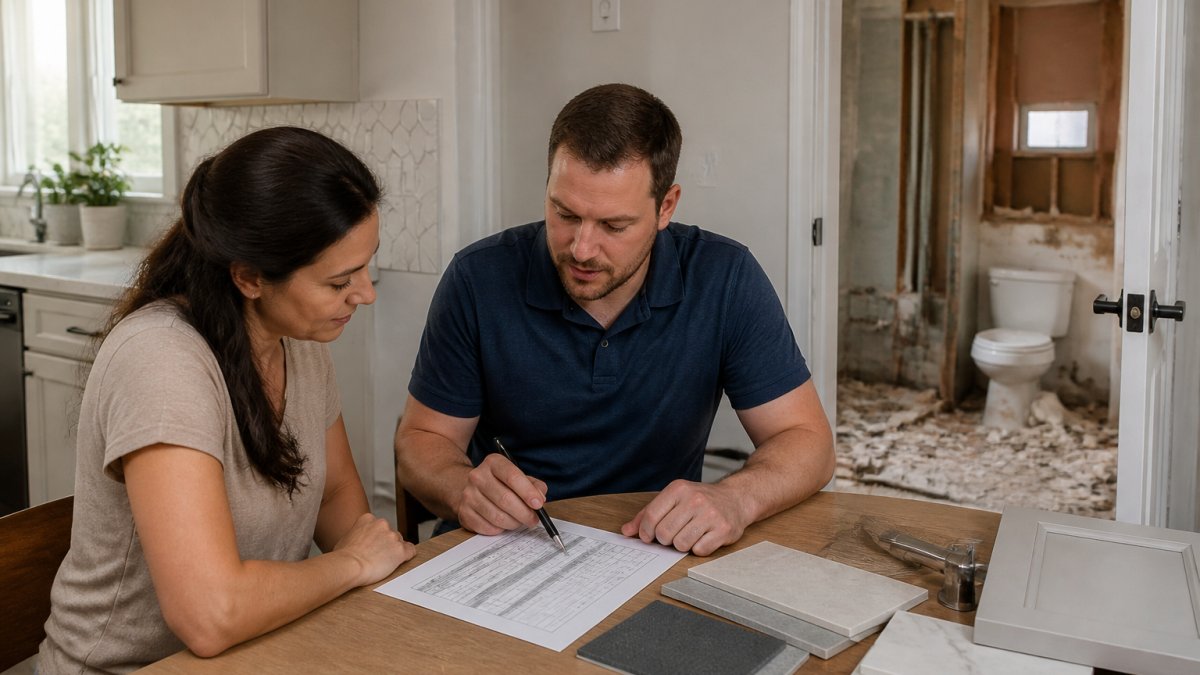
A contingency fund is money set aside for problems you cannot see until the walls are open. Old homes hide rotten subfloor, corroded pipes, and mold behind tile. None of it shows up in a quote, and none of it waits politely until you have saved up again.
How Big Should the Cushion Be?
Most renovators and financial planners who work on residential projects suggest setting aside a meaningful slice of the total project budget for surprises. The exact number depends on the age and condition of the home, but the principle is consistent: the older the plumbing, the more you hold back.
Treat the fund as spent the moment demolition starts. If you don’t need it, you’ve saved money. If you do, you’re not scrambling for a credit line mid-project while the room sits half-gutted.
Cosmetic Overruns vs. Structural Surprises
These are two different problems and they need two different responses.
- Cosmetic overruns, a tile you love costs more than the allowance, a fixture is backordered and the substitute is pricier. These are choices. You can say no, downgrade, or wait.
- Structural surprises, a failed drain line, mold behind the shower wall, a subfloor that flexes underfoot. These are not choices. They have to be fixed before the project can continue, and the cost is whatever the fix costs.
A common pattern is that homeowners blow the contingency on cosmetic upgrades in the first week, then discover a structural problem in week two with nothing left. Protect the fund by writing a rule into your own plan: cosmetic changes come out of the finishes allowance, never out of the contingency.
When to Pause Instead of Push
If a structural surprise eats most of the fund and the project still has major work left, the honest move is to pause and re-scope. Finish the waterproofing and the rough-in, close the walls, and live with a functional but unfinished bathroom for a few months while you rebuild the budget. A phased finish costs less than a rushed one, and it keeps you out of high-interest borrowing.
Skipping the contingency fund is the most common budgeting mistake we see. When mold or a failed drain line turns up, the project stalls while the homeowner finds more money, and the timeline stretches by weeks. A stalled renovation is also the most expensive kind, trades move on to other jobs, and re-mobilizing costs more than the original work would have.
Set the contingency before you pick finishes, treat it as already spent, and never let a cosmetic upgrade touch it. That single rule prevents most mid-project budget crises.
Weigh DIY Against Professional Bathroom Vanity Installation Services
DIY saves on labor, but only in the right places. Painting, swapping hardware, and installing a mirror are safe weekend jobs. Anything involving water, gas, or wiring is not.
Professional bathroom vanity installation services exist for a reason. A vanity ties into supply lines and a drain, and a small leak behind a cabinet can rot a floor for months before you notice. Tiling is the same story: bad waterproofing behind a shower is invisible until it fails.
Do the math honestly. If a DIY mistake costs more to fix than the pro would have charged, it wasn’t a saving.
| Task | DIY Friendly? | Why |
|---|---|---|
| Painting walls | Yes | No permits, low risk |
| Swapping cabinet hardware | Yes | Cosmetic, reversible |
| Hanging a mirror | Yes | Simple mounting |
| Tiling a shower | No | Waterproofing is unforgiving |
| Moving a drain | No | Requires a permit and a pro |
| Wiring a new light | No | Safety and code risk |
Plan Disabled Bathroom Renovations as a Phased Project
Disabled bathroom renovations often get priced as one giant job, and the number scares people off. Breaking it into stages makes it manageable and lets you spread the cost over time. It also lets you test what actually works for the person using the room before committing to the next stage.
What Has to Happen Together
Not everything can be phased. Some work only makes sense when it’s done in one pass, because opening the same wall twice costs more than opening it once.
- Waterproofing and the shower base must be built together. A curbless entry requires the floor to be sloped and the membrane to run continuously into the drain. If you install a standard shower now and want a curbless one later, you’re demolishing the whole wet area.
- Rough-in plumbing and electrical should be planned for the final layout even if you only install part of it now. Adding blocking for future grab bars, or running a circuit for a heated floor, costs very little during the rough-in and a great deal afterward.
- Doorway widening usually means moving a wall or reframing a header. That’s a structural change, and it’s cheaper to do while the room is already open.
Everything else, grab bars, comfort-height toilets, non-slip flooring, lighting, vanities, can be staged without redoing earlier work.
A Practical Three-Stage Roadmap
- Stage one: safety and access. Grab bars anchored into blocking, a comfort-height toilet, non-slip flooring, and better task lighting. These are the features that prevent falls and make daily use easier, and they’re the least disruptive to install.
- Stage two: the wet area. Shower conversion to a curbless or low-threshold entry, a handheld shower on a slide bar, a fold-down seat, and proper waterproofing. This is the stage that usually requires the most planning and the longest disruption.
- Stage three: comfort and finish. A roll-under or adjustable-height vanity, storage within reach, a mirror at the right height for a seated user, and the finishing touches that make the room feel finished rather than clinical.
Each stage stands on its own. You’re never living in a half-finished room for months, and you can stop between stages if the budget or the household’s needs change.
Planning Around Standards and Permits
Accessibility features aren’t just preferences, many have dimensional standards that affect how the room is built. Reach ranges, turning space, and grab bar heights all have accepted guidelines that renovators who specialize in accessible bathrooms work to.
Permits are the other sequencing constraint. Moving a drain, adding a circuit, or altering a wall usually triggers a permit and an inspection.
If you’re planning disabled bathroom renovations, decide the final layout first, even if you only build stage one this year. Every later stage gets cheaper and easier when the rough-in already anticipates it.
Households planning accessibility upgrades over two to three years, or anyone who wants to age in place without committing to a full renovation in a single budget cycle.
Choose Upgrades That Pay Back at Resale
Not every dollar you spend comes back when you sell. Some upgrades carry weight with buyers, and some don’t.
- Strong payback: a clean, modern vanity, updated lighting, and neutral tile
- Strong payback: a functional layout that doesn’t feel cramped
- Weak payback: bold, personal colors and high-end custom work
- Weak payback: luxury fixtures that don’t match the rest of the home
The throughline here is simple. Buyers want a bathroom that feels clean, bright, and easy to maintain. Spend where they’ll notice.
Homeowners planning to sell within a few years who want updates that hold value without overbuilding for the neighborhood.
How a Bathroom Reno Vancouver Homeowners Trust Stays on Budget
Staying on budget comes down to planning, not luck. A fixed scope, a real contingency fund, and honest staging beat any list of cosmetic shortcuts.
This is where the right renovator can make a difference. Bathroom Renovators works with homes across Vancouver, North & West Vancouver, Burnaby and Port Moody, specs materials that hold up to Vancouver’s moisture, and gets projects done typically in 7-10 days.
A free quote gives you a ballpark before you commit, and a 1-year warranty means you’re covered if something doesn’t hold up.
Frequently Asked Questions
What should be included in a bathroom renovation budget breakdown?
A working breakdown separates fixed costs from variable ones. Fixed costs include fixtures and fittings, tile, cabinetry, and the labour quote you have signed. Variable costs include demolition surprises, plumbing repairs, and any changes you request mid-project. Add a contingency line of 10 to 20 percent on top, plus a separate allowance for temporary bathroom access if your only bathroom will be out of service. Reviewing this breakdown before work starts is the single biggest factor in keeping your bathroom renovation budget intact.
How do I choose between DIY and professional bathroom renovation services?
Match the task to your skills and to what your local authority requires. Painting, swapping cabinet hardware, and installing a mirror are realistic DIY jobs. Plumbing, electrical, waterproofing, and tile setting are not, and mistakes there cost more to fix than the original installation. For anything behind the walls, hiring a professional is usually the cheaper decision over time.
What are common bathroom renovation mistakes that blow the budget?
The most expensive mistakes are moving the toilet or shower drain, skipping a written scope, and starting demolition before materials arrive. Others include choosing natural stone without sealing it for a wet room, buying a vanity before measuring the space, and treating the contingency fund as spending money. Each one adds labour, delays, or rework. A written scope with a payment schedule tied to milestones prevents most of them.
What is the average cost of renovating a bathroom?
Costs vary widely with size, layout changes, and material choices, so no single figure applies to every home. Request itemized quotes from at least two contractors and compare what each one includes, not just the total. A quote that excludes demolition, disposal, or waterproofing will look cheaper until those costs appear as extras. Getting a free, no-obligation quote is the most reliable way to see what your specific bathroom will cost.
Managing a bathroom renovation budget is hard when the scope keeps shifting and the timeline keeps stretching. Bathroom Renovators handles both with free quotes, projects typically completed in 7-10 days, and a 1-year warranty on the work. Get your free consultation and start your renovation with a plan you can actually stick to.
