
Table of Contents
- How to Renovate Bathroom Quickly: Start With a Clear Plan
- Bathroom Renovation Planning Checklist: What You Need Before Day One
- Bathroom Renovation Timeline: What Gets Done When
- Bathroom Renovation Without Moving Plumbing: Keep It Fast
- Bathroom Renovation Mistakes to Avoid: Save Time and Money
- Quick Refresh vs. Full Renovation: Which Route Is Right for You
- Keeping Your Bathroom Usable During the Renovation
- Frequently Asked Questions
Last Updated: October 10, 2026
How to Renovate Bathroom Quickly: Start With a Clear Plan
The biggest mistake homeowners make when trying to renovate bathroom quickly is skipping the planning phase. Speed starts before any demolition begins.
Renovations that stay on schedule share one thing: a detailed plan covering materials, permits, sequencing, and contingencies. Without it, surprises derail timelines.
Order all materials before demolition starts. Lead times on fixtures, tiles, and vanities are the #1 cause of delays. Lock in delivery dates during planning, not during the project.
Bathroom Renovation Planning Checklist: What You Need Before Day One
You need three things locked in before work begins: materials selected and ordered, permits filed if required, and a realistic timeline with contingencies built in.
Material Selection and Lead Times
Choose fixtures, tiles, paint, and vanity before demolition. Modern supply chains mean some items take 2-4 weeks to arrive.
Track each item, supplier, and delivery date. If a vanity arrives on day 8 and you need it on day 6, reorder or adjust your schedule.
Common materials and typical lead times:
- Vanities: 1-3 weeks
- Custom mirrors: 1-2 weeks
- Tile (large format): 1-2 weeks
- Paint and finishes: 3-7 days
- Fixtures and hardware: 3-10 days
Permits and Building Code Requirements
Most bathroom renovations require permits for plumbing, electrical, or structural work. Permits take 5-10 business days to issue. Inspections happen mid-project and at the end.
Building codes in Canada require:
- Proper ventilation (exhaust fans must vent outside, not into attics)
- Electrical work done by licensed electricians (GFCI protection required in wet areas)
- Plumbing work meeting current standards (backflow prevention, proper slope on drain lines)
- Structural repairs using approved materials
Skipping permits creates liability. Unpermitted work can derail a home sale. Get the permit.
Working without a permit can void your home insurance claim if something goes wrong. Water damage from improper plumbing or electrical fire from unlicensed work won’t be covered. The short-term savings disappear fast.
Bathroom Renovation Timeline: What Gets Done When
A 7-10 day bathroom renovation follows this sequence. Each phase depends on the one before it. If you skip steps or rush surface prep, finishes fail.
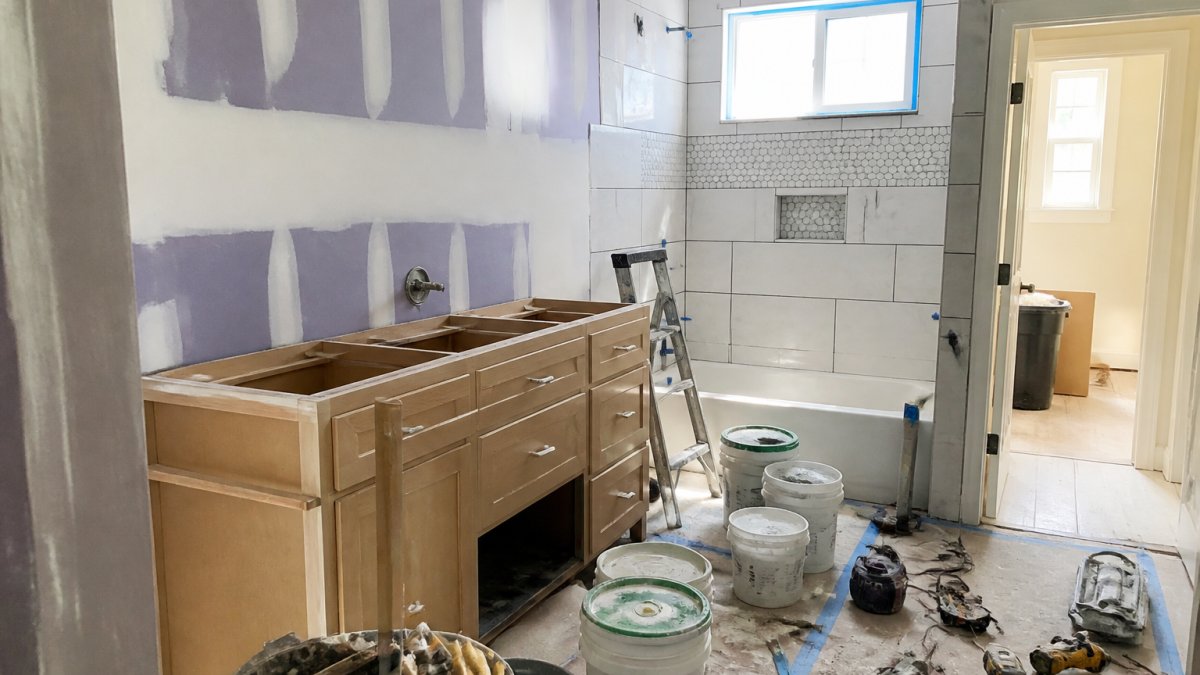
Days 1-2: Demolition and Prep Work
Remove the old vanity, fixtures, mirror, and hardware. If removing tile, factor in 1-2 extra days.
Turn off water and electricity. Seal doorways and vents with plastic sheeting to contain dust.
Demo work:
- Remove vanity and fixtures (4-6 hours)
- Strip tile or finishes (4-8 hours)
- Haul debris (2-4 hours)
- Inspect for damage (2-3 hours)
By end of day two, the bathroom is empty. Hidden problems like soft framing, mold, or code violations may appear. Budget a contingency day if found.
Days 3-5: Rough-In Work and Surface Preparation
This phase includes plumbing changes, electrical work, and wall repair. Licensed plumbers and electricians handle this work, you can’t speed it up without sacrificing safety.
Surface prep takes the most time. Patch drywall, sand joints, and prime walls. Poor prep shows in finished paint and tile.
Work sequence:
- Plumbing rough-in (1-2 days)
- Electrical rough-in (1 day)
- Drywall patching and mudding (1-2 days)
- Sanding and priming (1 day)
By end of day five, walls are ready for paint and tile. Plumbing and electrical are tested and ready for fixtures.
Days 6-8: Finishes and Installation
Paint walls, install tile, and install the new vanity. These visible steps make the bathroom look new.
Tile work takes precision. Plan 1-2 days for wall tile and 1 day for floor tile.
By end of day eight, the bathroom looks finished. Fixtures aren’t installed yet, but the structure and surfaces are done.
Days 9-10: Final Touches and Inspection
Install light fixtures, mirrors, faucets, and hardware. Caulk joints and paint trim.
These details require attention. Check everything before completion.
If permits were required, schedule the final inspection on day nine or ten for plumbing, electrical, and ventilation checks.
The timeline works only if materials arrive on time and no major damage is found during demolition. Build in a contingency day for the unexpected. Most renovations finish in 8-10 days when planned properly.
Bathroom Renovation Without Moving Plumbing: Keep It Fast
Moving plumbing adds 2-4 days. If your current vanity location works, keep it and reuse existing lines.
Moving the vanity more than a few feet requires rerouting plumbing, opening walls, and running new lines, slower and more expensive.
Keeping the existing layout is the fastest option. You save plumbing time and reduce code violation risks.
Bathroom Renovation Mistakes to Avoid: Save Time and Money
Common mistakes cost days and money. Avoid these and your renovation stays on track.
Ordering materials late. You’ve already learned this one. Order before demolition. Late materials kill timelines.
Skipping surface prep. Rushing drywall mudding or wall prep shows in the final paint and tile. Spend the time. It’s faster than redoing it.
Choosing complex tile layouts. Large-format tiles and straight layouts are faster than mosaics and patterns.
Not protecting adjacent areas. Seal the bathroom with plastic and clean as you go to minimize dust spread.
Changing plans mid-project. Make all decisions before day one.
Hiring unlicensed trades. Using unlicensed plumbers or electricians might seem faster. It’s not. Code violations require rework. Use licensed trades.
Quick Refresh vs. Full Renovation: Which Route Is Right for You
A quick refresh updates finishes without touching structure or plumbing. A full renovation changes layout, systems, or structural elements. Choosing the right scope saves time and money, or costs you both if you pick wrong.
Quick Refresh: 3-5 Days, Cosmetic Updates Only
What’s included:
- Paint walls and ceiling
- Replace vanity cabinet (reusing existing plumbing connections)
- New mirror and light fixture (reusing existing electrical box)
- New hardware, towel bars, and accessories
- Caulk and seal joints
- Optional: replace vinyl flooring or paint tile grout
Best for:
- Bathrooms with a functional layout and good bones
- Plumbing and electrical that meet current code
- Cosmetic wear (dated finishes, worn paint, outdated fixtures)
- Homeowners who want a quick visual update without disruption
- Tight budgets where major structural work isn’t feasible
Material durability and limitations:
A quick refresh extends bathroom life 5-10 years if finishes are the only problem. If underlying plumbing or electrical is aging, you’re not addressing the root issue. Painted grout needs repainting in 2-3 years and won’t fix leaking drains or water damage.
Labour and timeline:
Most work is surface-level, allowing general handypeople to handle it. No permits required if you’re not moving plumbing or electrical.
When a quick refresh fails:
If you discover soft framing, mold, or code violations during demolition, you’ll need to stop and repair. A pre-renovation inspection reveals hidden problems before you commit.
Full Renovation: 7-10 Days, Structural and Systems Updates
What’s included:
- Complete demolition and disposal
- Plumbing rough-in (moving drains, adding fixtures, upgrading supply lines)
- Electrical rough-in (new circuits, GFCI protection, exhaust fan wiring)
- Structural repair (framing, moisture barriers, ventilation)
- Drywall patching, mudding, and priming
- New tile or flooring throughout
- New vanity, fixtures, and hardware
- Paint and final finishes
- Permits and inspections
Best for:
- Bathrooms with layout problems (vanity in wrong spot, poor traffic flow)
- Aging plumbing or electrical that doesn’t meet code
- Water damage, mold, or soft framing
- Bathrooms with poor ventilation or moisture issues
- Homeowners upgrading to modern systems and finishes
- Resale preparation (full renovations add more perceived value)
Material durability and performance:
A full renovation replaces systems and finishes with modern, code-compliant materials. Tile, flooring, plumbing, and electrical are new and warrantied. You get 15-20 years of reliable performance before major updates are needed again.
Labour and timeline:
Full renovations require licensed plumbers and electricians for rough-in work. General contractors or skilled carpenters handle framing, drywall, and finishes. This increases labour costs but ensures code compliance and quality. Permits and inspections add 5-10 days to the overall timeline.
When a full renovation makes sense:
If your bathroom is more than 20 years old, has plumbing or electrical issues, or shows signs of water damage, a full renovation is the better long-term choice.
Decision Framework: Quick Refresh or Full Renovation?
Ask yourself these questions:
1. Is the layout functional?
- Yes → Quick refresh is viable
- No (vanity in wrong spot, poor flow, missing storage) → Full renovation
2. Is the plumbing up to code and leak-free?
- Yes → Quick refresh is viable
- No (visible leaks, old galvanized pipes, improper venting) → Full renovation
3. Is the electrical safe and adequate?
- Yes (outlets near sink have GFCI, lighting works, no exposed wiring) → Quick refresh is viable
- No (no GFCI, outdated panel, insufficient outlets) → Full renovation
4. Are there signs of water damage or mold?
- No → Quick refresh is viable
- Yes → Full renovation (damage must be addressed)
5. How old is the bathroom?
- Less than 15 years, good condition → Quick refresh is viable
- More than 20 years or showing wear → Full renovation
If you answered “yes” to any of questions 2-4, or “more than 20 years” to question 5, a full renovation is the better choice. A quick refresh on a bathroom with underlying problems will fail within a few years, and you’ll end up renovating again.
The Middle Ground: Partial Renovation
Many homeowners fall between these two extremes. A partial renovation might include:
- New vanity and plumbing rough-in (moving the sink)
- New tile and flooring
- Updated electrical (GFCI outlets, new light fixture)
- Paint and finishes
- No structural changes or major layout shifts
This takes 8-10 days and costs more than a quick refresh but less than a full renovation. It addresses code and durability issues without a complete overhaul. Discuss this option with your contractor during planning.
Keeping Your Bathroom Usable During the Renovation
Seven to ten days without a bathroom is rough. Plan for this.
If you have a second bathroom, use it during renovation. The primary bathroom will be unusable for most of the project.
If you have only one bathroom, consider:
- Staying with family or friends for the week
- Using a hotel for nights when plumbing is shut off
- Scheduling the renovation around work schedules (start Friday, finish the following Thursday)
Some contractors can work around a partial shutdown, turning water and power off for specific hours, then restoring it. This adds time but keeps the bathroom partly usable.
Bathroom Renovators schedules projects to minimize disruption. We plan the sequence so you have water and electricity restored by evening when possible. It’s not always possible, but we work toward it.
A bathroom renovation doesn’t have to take months.
Ready to get started? Bathroom Renovators handles the planning, sequencing, and execution so you don’t have to.
Frequently Asked Questions
How long does it usually take to renovate a bathroom?
A focused bathroom renovation can be completed in 7-10 days when properly planned and coordinated. This timeline assumes you’ve selected materials in advance, obtained necessary permits, and have a dedicated team working through the project phases. Timelines vary based on the scope: a simple refresh with new fixtures and paint may take 5-7 days, while a full renovation with plumbing or electrical changes may extend toward 10 days. The key is preparation before work begins.
Can you renovate a bathroom without changing the plumbing layout?
Yes. Keeping existing plumbing in place is one of the fastest ways to renovate a bathroom. By working with your current fixture locations, you avoid costly rerouting, reduce inspection delays, and eliminate structural work. You can still refresh the space completely by updating the vanity, fixtures, flooring, walls, and lighting while the plumbing stays put. This approach works well for families looking for a modern update without the extended timeline that plumbing changes require.
What are the most common mistakes to avoid when renovating a bathroom?
The biggest mistakes are poor planning, inadequate material lead time, and underestimating hidden damage behind walls. Ordering fixtures late, failing to get permits, and not preparing for contingencies all add weeks to a project. Many homeowners also skip surface preparation, leading to poor paint or tile adhesion. Starting demolition before materials arrive, not protecting the rest of the home from dust, and changing the design mid-project are also costly delays. A solid plan and realistic contingency budget prevent most of these issues.
What bathroom renovation tasks can be completed fastest?
Fixture replacement, painting, and hardware updates are quick wins that transform the space in days. Installing new vanities, faucets, mirrors, and lighting can be done in 1-2 days. Wall and floor updates, such as paint or simple tile work on small areas, typically take 2-3 days. Plumbing and electrical work take longer but are essential for a complete renovation. Prioritizing cosmetic updates first, then moving to structural work, keeps momentum and allows faster completion of visible improvements.
