
Accessible bathroom renovation in Vancouver looks nothing like it did ten years ago. The grab bars are stylish. The walk-in showers are stunning. The tiles are larger and the glass enclosures are almost always frameless. And the homeowners planning these projects aren’t waiting for a crisis to force their hand, they’re making smart decisions about the homes they plan to live in and enjoy for the next 10-20 years.
This guide covers what Vancouver homeowners actually need to know: features, costs, grants, and how to find a contractor you can trust and who’s done this before.
Why Smart Vancouver Homeowners Are Planning This Now
Most people will need an accessible, useful bathroom eventually. The question is whether you do it on your terms or under pressure after a fall or health event.
BC’s population is aging fast. The Lower Mainland has a large and growing demographic of homeowners in their 50s and 60s thinking seriously about long-term livability. The ones who renovate now get to make good decisions with good materials at lower costs than if they were to do it in 5+ years. Emergency accessibility retrofits done under various pressures almost always produce results that look worse and cost more.
It is also smart to think about the property value aspect of your home and how any renovation in the key areas of your home (bathrooms, kitchen, flooring) affects it. Accessible, functional bathrooms appeal to a wider buyer pool, aging homeowners, multi-generational families, and buyers thinking ahead. In Vancouver’s market, that’s not a small consideration.
Core Features of an Accessible Bathroom Renovation in Vancouver
1. Walk-In or Roll-In Shower
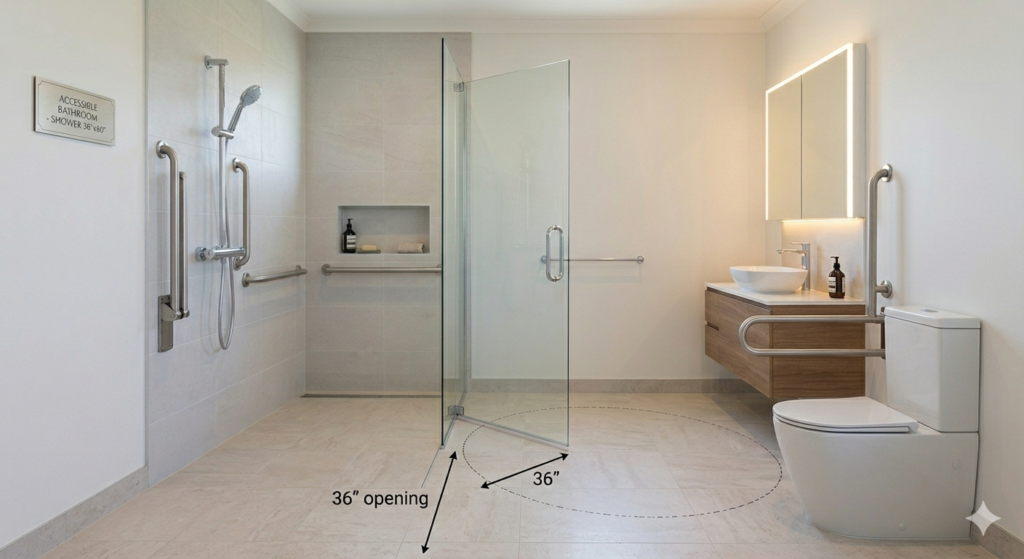
The walk-in shower is the centrepiece of most accessible bathroom renovations in Vancouver. Eliminating the step-over entry of a traditional tub or shower curb reduces fall risk dramatically and accommodates mobility aids without compromising the look of the space.
What good accessible shower design includes:
- Zero-threshold entry, flush with the bathroom floor
- Minimum 36″x36″ interior, with 60″x30″ or larger for wheelchair access
- Properly sloped floor draining to a linear or centre drain
- Fold-down bench inside the shower
- Handheld showerhead on a sliding bar
- Recessed shelving at accessible height
A well-designed walk-in shower is a focal point, not a clinical addition.
2. Grab Bars
Grab bars are the most underused safety feature in residential bathrooms. They’re also among the most important.
Modern grab bars come in finishes that match any hardware: matte black, brushed nickel, and brushed gold. They look like intentional design decisions, not afterthoughts. The critical factor is installation: grab bars must anchor into studs or blocking behind the wall. A bar that pulls out of drywall is worse than no bar at all.
Standard locations:
- Inside the shower, near entry and beside the bench
- Beside the toilet, one or both sides
- At the shower or tub entry
If you’re doing a full renovation, your bathroom contractor needs to have blocking installed behind walls during the initial rough-in phase. Future grab bar installation then becomes simple and inexpensive.
3. Comfort-Height Toilet
Standard toilets sit at roughly 15 inches from floor to seat. Comfort-height toilets sit at 17–19 inches, meaningfully easier to sit down onto and rise from, especially with hip, knee, or lower back issues. Low cost, immediate benefit.
Call Now To Find Out Your Options
4. Wider Door Entry
Standard interior door openings run 30–33 inches, too narrow for a wheelchair or walker. A 36″ clear opening is the minimum for wheelchair access. Widening a door opening is a framing job that in most cases causes minimal structural disruption.
Pocket doors work particularly well in accessible bathrooms: no swing arc, no clearance required in front.
5. Slip-Resistant Flooring
Tile texture and finish matter more than most people realize. Smaller tiles mean more grout lines and more grip. Matte finishes outperform polished.
The range of slip-resistant tile available today is wide. Safe doesn’t mean boring.
6. Accessible Vanity
For wheelchair users, a wall-mounted vanity at 34 inches with open knee clearance beneath allows use from a seated position. Lever-style faucet handles are far easier to operate than knobs for anyone with limited hand strength. This applies to more people than you’d think.
BC Grants and Funding for Accessible Bathroom Renovations
Several programs exist to offset costs for Vancouver homeowners:
BC Home Renovation Tax Credit
British Columbia offers a refundable tax credit for eligible accessibility renovation expenses. Verify current rates and eligibility with your accountant or the BC Ministry of Finance directly.
CMHC Accessible and Adaptable Housing
The Canada Mortgage and Housing Corporation offers funding information and, in some cases, grants or loans for accessibility modifications. Visit cmhc-schl.gc.ca or call 1-800-668-2642.
Veterans Affairs Canada
The Veterans Independence Program may cover home adaptations for qualifying veterans.
These programs change — verify current eligibility directly before building them into your budget.
What an Accessible Bathroom Renovation Costs in Vancouver
Real numbers for 2026, not promotional minimums:
- Walk-in shower conversion from tub: $8,000 – $18,000
- Grab bar installation with blocking: $500 – $1,500 per location
- Comfort-height toilet, including installation: $400 – $1,200
- Door widening: $800 – $2,500 depending on structural conditions
- Full accessible bathroom renovation: $25,000 – $55,000
Vancouver labour rates and material costs drive these numbers. If a quote comes in dramatically lower, be wary and ask detailed questions before signing anything.
Finding the Right Contractor for an Accessible Bathroom in Vancouver
Not every renovation contractor has the needed experience — and the gap matters. Before hiring, ask:
- Are you familiar with BC Building Code accessibility requirements?
- Have you built zero-threshold showers before?
- How do you handle grab bar blocking during rough-in?
- Can you provide references from accessibility-specific projects?
At Bathroom Renovators, we’ve completed accessible bathroom renovations across Vancouver, North Vancouver, and the surrounding Lower Mainland. Accessibility and beautiful design are not in conflict — and we approach every project like they belong together.
Thinking About an Accessible Bathroom for Your Home?
Whether you’re planning ahead or responding to a specific need, the earlier the conversation happens, the better the result. As the owner of Bathroom Renovators, I work directly with Vancouver homeowners at every stage of the planning process.
Call Now To Find Out Your Options

I’ve been working in the Lower Mainland of Vancouver residential construction since the year 2000, specializing in home renovations, with the most volume involving bathroom & kitchen renovations. I started Bathroom Renovators on a straightforward idea: homeowners deserve trade-level integrity, honesty and a headache-free approach to their renovation needs.