
Table of Contents
- 10 Luxury Bathroom Tile Trends for 2026
- 1. Natural Stone and Organic Textures
- 2. Large-Format Porcelain Tiles
- 3. Zellige and Handcrafted Tile Aesthetics
- 4. Fluted and 3D Textured Surfaces
- 5. Warm Color Palettes Over Cool Grays
- 6. Wood-Effect Porcelain Tiles
- 7. Geometric and Chequerboard Patterns
- 8. Sustainable and Eco-Friendly Materials
- 9. Tile-Drenching and Japandi Minimalism
- 10. Terrazzo Revival
- Best Bathroom Tile Materials for High-End Renovations
- Luxury Bathroom Tile Color Palettes for 2026
- Tile Installation Costs and Renovation ROI
- Bathroom Tile Maintenance and Sealing Tips
- Frequently Asked Questions
Last Updated: August 26, 2026
Tile choices define a luxury bathroom more than almost any other decision. The wrong material dates a space within five years; the right one holds up visually and structurally for decades. At Bathroom Renovators, we work through hundreds of tile selections every year across Vancouver and the North Shore, and the shift we’re seeing heading into 2026 is clear: homeowners are moving away from safe, sterile aesthetics toward materials with genuine character, texture, and warmth.
This guide covers the 10 luxury bathroom tile trends defining 2026, plus the practical details most inspiration-only articles skip: slip resistance ratings, grout color strategy, lighting compatibility, and what these choices actually cost.
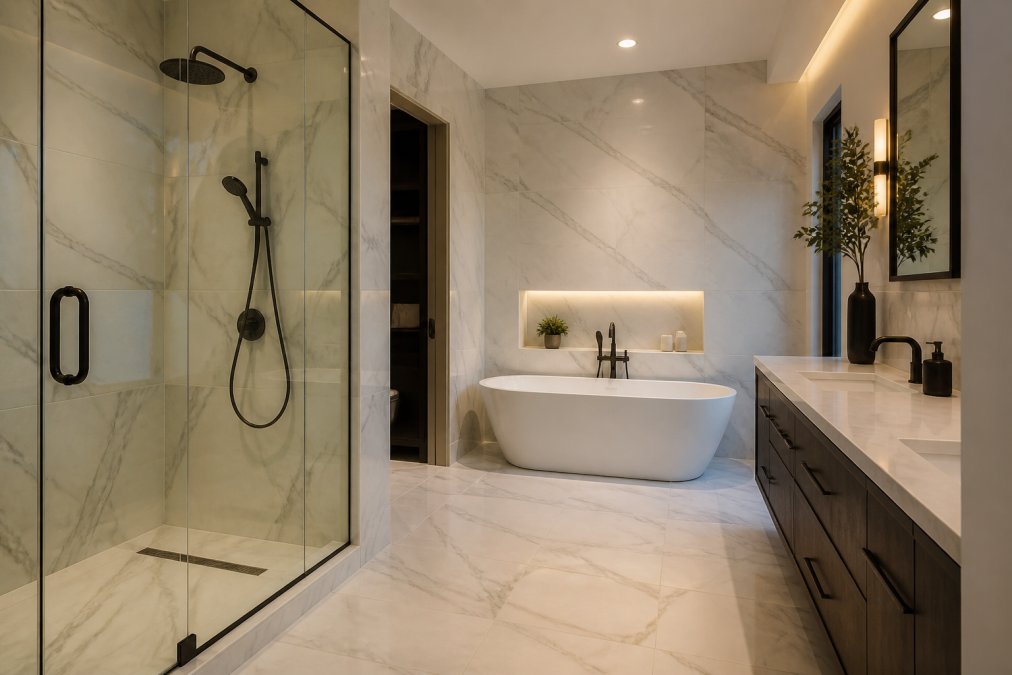
10 Luxury Bathroom Tile Trends for 2026
Luxury bathroom tile in 2026 is defined by one overarching shift: organic over clinical. The cold, all-white, grout-heavy bathrooms of the mid-2010s are being replaced by spaces with genuine character.
1. Natural Stone and Organic Textures
Natural stone is having its most significant moment in a decade. Limestone, travertine, and honed marble are replacing polished surfaces because they age gracefully rather than showing every water spot. Travertine in particular is back in refined form, filled and honed finishes deliver organic texture without the maintenance burden of unfilled stone.
The practical caveat: natural stone requires sealing on installation and annual maintenance. In Vancouver’s humid climate, skipping this step leads to staining and moisture absorption. Done right, natural stone consistently adds perceived value to a renovation.
Honed travertine floors pair exceptionally well with a polished marble feature wall. The contrast between matte and gloss finishes creates visual interest without visual noise.
2. Large-Format Porcelain Tiles
Large-format tiles, typically 600mm x 1200mm and larger, have moved from niche to mainstream luxury choice. Fewer grout lines mean a cleaner visual field, making smaller bathrooms read as larger. Porcelain can replicate marble veining, concrete, and wood grain with precision that has closed the gap with natural materials. For high-traffic bathrooms, durability and lower maintenance costs make a strong case.
According to Tile Council of North America’s installation guidelines, large-format tiles require specific substrate preparation and specialized adhesive systems to prevent lippage and cracking. This is not DIY-friendly, and cutting corners on substrate preparation is the most common cause of failure within two years.
3. Zellige and Handcrafted Tile Aesthetics
Zellige separates genuinely considered luxury bathrooms from ones that simply spent money. These hand-pressed Moroccan clay tiles carry surface variation and gloss-finish depth that machine-made tiles cannot replicate. Each tile is slightly different, giving the finished installation a liveliness that grows over time.
Zellige works best as a feature surface rather than full-room application. A niche design, shower back wall, or vanity splashback lets the material speak without overwhelming the space.
Zellige tiles have significant thickness variation, requiring a skilled tiler experienced with the material. Standard installation methods result in uneven surfaces and grout-line inconsistency that ruins the effect.
4. Fluted and 3D Textured Surfaces
Fluted tile has moved from accent detail to defining feature. The vertical channel profile creates shadow lines that shift throughout the day, giving walls genuine visual depth. 3D textured tiles extend this principle with wave profiles, geometric relief, and sculpted surfaces that interact with light.
Fluted porcelain works well on vanity walls and shower niches. For floors, 3D texture introduces slip-resistance benefits alongside aesthetics. Combining a fluted wall tile with smooth large-format flooring adds sophistication without complexity.
5. Warm Color Palettes Over Cool Grays
Cool gray is no longer the default luxury choice. Warm undertones have taken over: terracotta, dusty-blue, burgundy, mustard, and soft off-whites are replacing the blue-gray palette. Charcoal-grey remains relevant as an accent in matte finishes but works now as contrast to warm tones rather than as dominant color.
The most refined approach pairs warm stone tones on floors with a single accent color on a feature wall. Dusty-blue zellige against limestone. Terracotta subway-tiles behind a freestanding tub. Burgundy encaustic tiles in a niche framed by white porcelain.
Always view tile samples in your bathroom’s actual lighting conditions before committing. Warm tones read very differently under cool LED versus warm-spectrum bulbs.
6. Wood-Effect Porcelain Tiles
Wood-effect porcelain has reached visual accuracy that makes the “is it real wood?” question genuinely difficult. The practical case is straightforward: all the warmth and organic texture of timber, none of the moisture vulnerability.
The best versions use rectified edges and plank formats that mirror real timber installation, including staggered joints and varied grain patterns. This material works particularly well in japandi-influenced designs, pairing wood-effect porcelain floors with white plaster walls and matte black fixtures for a warm, minimal aesthetic.
7. Geometric and Chequerboard Patterns
Geometric tile patterns are a retro reference thoroughly absorbed into contemporary luxury design. Classic chequerboard in black and white reads as timeless when executed in large-format tiles with tight grout lines. Scaled to 300mm x 300mm or larger, it gains graphic confidence without busyness.
Hexagonal formats, diamond layouts, and Moroccan star patterns also appear in high-end bathrooms. The key is restraint: one geometric surface, typically the floor, with neutral large-format tiles on all walls. Geometric patterns also obscure minor wear, making them practical for family bathrooms.
8. Sustainable and Eco-Friendly Materials
Sustainable materials now compete directly with conventional luxury options. Recycled glass tiles, reclaimed stone, and low-embodied-carbon manufactured tiles deliver finishes that rival traditional materials.
Terrazzo traditionally incorporates marble offcuts and aggregate that would otherwise be waste. Recycled glass tiles carry depth of color that solid ceramic cannot match, particularly in aquatic blues and greens for wet areas.
As documented in Canada Green Building Council’s material standards, sustainable material choices can contribute to green building certifications and may influence property assessments. For homeowners planning to sell, this is increasingly tangible rather than purely ethical.
9. Tile-Drenching and Japandi Minimalism
Tile-drenching applies a single tile material continuously across floors, walls, and ceiling, eliminating visual interruptions. The result feels larger, more cohesive, and more intentional.
The japandi aesthetic provides the design framework: neutral color-palette, natural materials, matte-finish surfaces, and spatial flow prioritizing calm. For tile-drenching to succeed, the tile choice must be genuinely neutral. A warm limestone or soft grey large-format porcelain can cover every surface without becoming oppressive. Strong patterns or saturated colors cannot.
This demands precise installation: any lippage or grout-line inconsistency is immediately visible when a single material runs uninterrupted across an entire room.
10. Terrazzo Revival
Terrazzo connects 2026’s luxury aesthetic to mid-century origins. The composite of marble, granite, or glass aggregate set in cement or resin has been refined significantly. Modern terrazzo tiles are available in large-format slabs, thin profiles for walls, and colors beyond institutional green.
Each tile carries unique aggregate distribution, creating surfaces with genuine depth and variation. Terrazzo works as floor, shower wall, and increasingly as vanity surface coordinating with floor tiles.
For maintenance, terrazzo requires sealing and periodic re-sealing similar to natural stone. Resin-based versions are more moisture-resistant than cement-based and better for wet areas.
Best Bathroom Tile Materials for High-End Renovations
The best materials balance aesthetic quality with practical performance across moisture resistance, durability, and maintenance. Porcelain leads on technical performance; natural stone leads on perceived luxury; handcrafted materials like zellige lead on individuality.
| Material | Best For | Maintenance Level | Slip Resistance |
|---|---|---|---|
| Large-format porcelain | Floors, shower walls, tile-drenching | Low | R9-R11 available |
| Natural stone (travertine, limestone) | Feature walls, floors | High (sealing required) | R10-R11 typical |
| Zellige | Feature surfaces, niches | Medium | Low on floors |
| Terrazzo | Floors, vanity walls | Medium (sealing required) | R10 typical |
| Wood-effect porcelain | Floors | Low | R10-R11 available |
| Recycled glass | Accent walls, niches | Low | Not recommended for floors |
Slip Resistance and Safety Ratings
Slip resistance is the specification most homeowners overlook. Tile slip resistance is rated on the R-scale in Canada, where R9 is the minimum for residential wet areas and R11 or higher is recommended for shower floors.
According to National Building Code of Canada guidance on slip resistance, floor surfaces in wet areas must meet specific friction coefficient requirements. Polished marble and high-gloss porcelain typically fall below R9 when wet, making them better suited to walls. Matte-finish and textured tiles consistently achieve R10 or better.
Always request the R-rating specification from your tile supplier before committing to a floor tile, particularly for shower bases.
Lighting Compatibility
Tile and lighting interact in ways showroom visits rarely reveal. Matte-finish tiles absorb light and create soft, diffused surfaces; gloss-finish tiles reflect light and amplify imperfections. Fluted and 3D textured tiles create shadow lines that shift with light angle and intensity.
Warm-spectrum LED lighting (2700K-3000K) brings out warmth in terracotta, limestone, and wood-effect porcelain. Cool-spectrum lighting (4000K-5000K) makes dusty-blue and charcoal-grey tiles read accurately. View tile samples under your bathroom’s actual lighting type before committing.
Luxury Bathroom Tile Color Palettes for 2026
Luxury bathroom tile color palettes in 2026 are defined by warmth, restraint, and intentional contrast. The dominant approach pairs a neutral ground tone with a single accent color that carries the space’s personality.
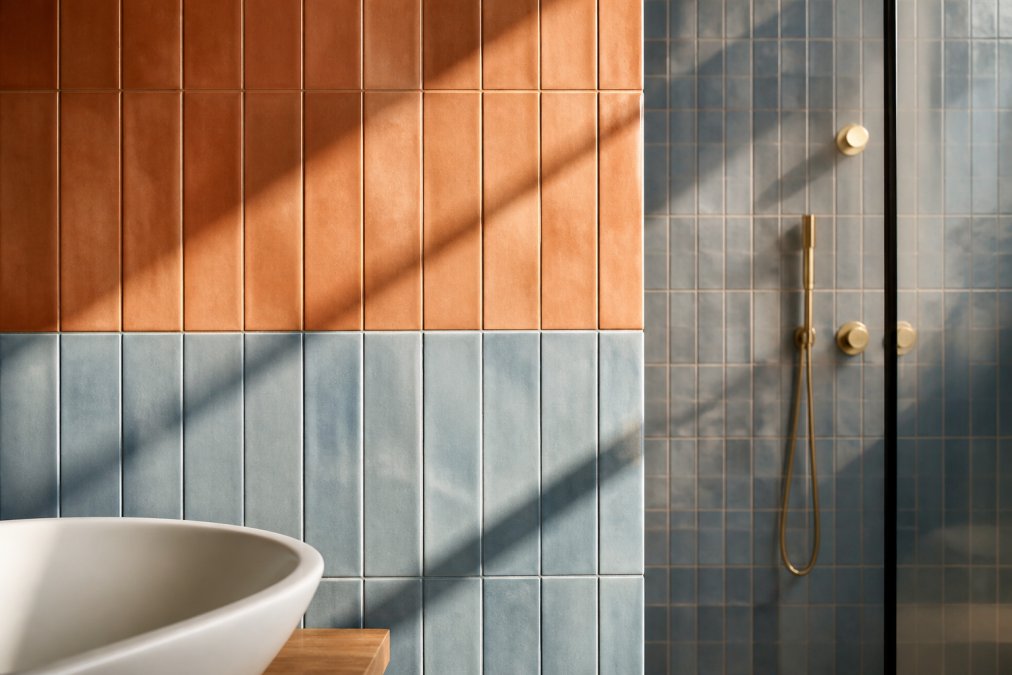
The most versatile palettes for 2026:
- Warm stone and matte black: Travertine or limestone floors with matte black fixtures and charcoal-grey feature wall
- Dusty-blue and warm white: Zellige or ceramic in dusty-blue on a feature wall, large-format warm white porcelain elsewhere
- Terracotta and natural oak: Terracotta floor tiles with wood-effect porcelain on the vanity wall
- Burgundy accent with neutral ground: A single burgundy niche or shower back wall against white large-format porcelain
- Charcoal and warm grey: Full charcoal-grey tile-drenching in matte porcelain for dramatic, minimal aesthetic
Grout Color Coordination
Grout color makes or breaks a tile installation. Matching grout to tile creates a seamless surface where the material reads as a continuous field, best for large-format tiles, tile-drenching, and natural stone. Contrasting grout defines the tile pattern and creates graphic clarity, ideal for chequerboard floors, geometric patterns, and zellige.
Lighter grout shows staining more readily in wet areas. Epoxy grout in any color resists staining and moisture far better than cement-based grout and is worth the additional cost in shower enclosures and floors.
Tile Installation Costs and Renovation ROI
Tile installation costs vary significantly based on material, format, and complexity. Large-format tiles cost more to install due to precise substrate preparation and heavier adhesive systems. Natural stone costs more than porcelain because of material cost and additional sealing. Zellige and handcrafted tiles carry premiums on both material and labor.
For renovation ROI, bathroom renovations consistently rank among the highest-return home improvement projects. Premium tile in a well-executed renovation adds more value than budget tile. A luxury bathroom tile selection, properly installed, is one of the most durable value additions a homeowner can make.
Pricing depends on tile selection, bathroom size, substrate condition, and design complexity. The Bathroom Renovators team provides free quotes breaking down material and installation costs transparently before any commitment.
The real cost of tile includes substrate preparation, adhesive systems, grout, sealing, and labor, typically exceeding material cost for premium installations. Budget for the full installation, not just the tile.
Bathroom Tile Maintenance and Sealing Tips
Proper maintenance separates a luxury bathroom that holds its value from one that deteriorates within years.
Natural stone (travertine, limestone, marble): Seal on installation with penetrating stone sealer. Re-seal annually in wet areas. Clean with pH-neutral stone cleaner only; acidic cleaners etch the surface. Avoid vinegar-based products.
Porcelain and ceramic: Minimal maintenance. Clean with standard tile cleaner. Grout lines require periodic cleaning and re-sealing every two to three years in wet areas.
Zellige: The irregular glaze can trap soap residue. Clean with soft cloth and mild detergent. Avoid abrasive scrubbers.
Terrazzo: Seal on installation. Avoid acidic cleaners. Polish periodically to maintain sheen. Resin-based terrazzo is more forgiving than cement-based.
Grout maintenance: Epoxy grout requires essentially no maintenance beyond regular cleaning. Cement-based grout should be sealed on installation and re-sealed every one to two years in shower enclosures. Cracked or missing grout in wet areas should be repaired immediately, it is the primary entry point for moisture damage.
For guidance on sealing standards, the Terrazzo Tile and Marble Association of Canada’s care guidelines provide detailed specifications by stone type.
The trends above represent a genuine shift in what luxury bathroom tile means in 2026: more texture, more warmth, more material integrity, and more technical precision in installation. Choosing the right tile is the first step; getting the installation right determines whether that choice holds up.
Bathroom Renovators specializes in exactly this kind of renovation, completed in 7-10 days with materials specified for durability in Vancouver’s climate. Our free consultation walks through tile selection, layout, and installation approach before any commitment. Get your free consultation and bring your 2026 tile vision into a bathroom that’s finished before it disrupts your life.
Frequently Asked Questions
What are the most popular luxury bathroom tile trends for 2026?
The standout luxury bathroom tile trends for 2026 include natural stone textures like limestone and travertine, large-format porcelain slabs, zellige and handcrafted tiles, and fluted 3D surfaces. Warm color palettes featuring terracotta, dusty-blue, and burgundy are replacing the cool grays that dominated the previous decade. Tile-drenching, where floors, walls, and niches share the same tile, is also gaining significant traction in high-end renovations.
What bathroom tile never goes out of style?
Subway tiles, marble-veining porcelain, and classic chequerboard patterns have proven durability across decades of interior design shifts. Natural stone materials like travertine and limestone also hold their appeal because their organic textures age gracefully. For a renovation you won’t regret in ten years, pairing a timeless tile format with a neutral or warm-undertone color palette gives you both current appeal and long-term visual interest.
Are large-format tiles still trending for luxury bathrooms in 2026?
Yes. Large-format porcelain tiles remain one of the strongest trends in 2026, particularly in sizes of 60 cm x 120 cm and larger. Their appeal comes from fewer grout lines, which creates a cleaner spatial flow and makes small bathrooms appear larger. They also reduce maintenance time. For high-end renovations, large-format tiles with subtle marble veining or matte finish are especially popular because they combine durability with a refined aesthetic.
How do I choose durable yet luxury tiles for a bathroom renovation?
Start with the tile’s slip-resistance rating and water absorption class, both of which matter in wet areas. Porcelain consistently outperforms ceramic for durability because it absorbs less moisture. For a luxury finish, look for matte or satin surfaces in natural stone looks like limestone or travertine-effect porcelain. Always confirm the tile’s PEI wear rating suits floor use. A professional renovation team can help match your aesthetic goals to the technical specs that will actually hold up long-term.
What are the maintenance requirements for high-end bathroom tiles?
Natural stone tiles like travertine and limestone require sealing every one to two years to prevent staining and moisture penetration. Porcelain and ceramic tiles are lower maintenance but still benefit from grout sealing annually, especially in high-humidity bathrooms. For zellige and handcrafted tiles with irregular surfaces, use a pH-neutral cleaner to avoid damaging the glaze. Avoid abrasive scrubbers on matte-finish tiles, as they can dull the surface over time.
This article was written using GrandRanker
