
Table of Contents
- Average Bathroom Remodel Cost Breakdown
- Factors That Influence Your Bathroom Remodel Cost
- Small Bathroom Renovation Cost: What to Expect
- Hidden Costs: Permits, Contingencies, and Surprises
- DIY vs. Professional Labor: Real Cost Comparison
- Bathroom Renovation Timeline: What the Schedule Looks Like
- Hiring a Bathroom Contractor: What to Look For
- Conclusion
Last Updated: August 25, 2026
Average Bathroom Remodel Cost Breakdown
Bathroom remodel cost is one of the most searched renovation topics because most homeowners have no idea what they’re walking into until a contractor hands them a quote. At Bathroom Renovators, we’ve spent over 26 years working through every scenario imaginable, from quick cosmetic refreshes to full gut-and-rebuild projects with custom tilework. Below, we break down exactly where the money goes so you can plan with confidence.
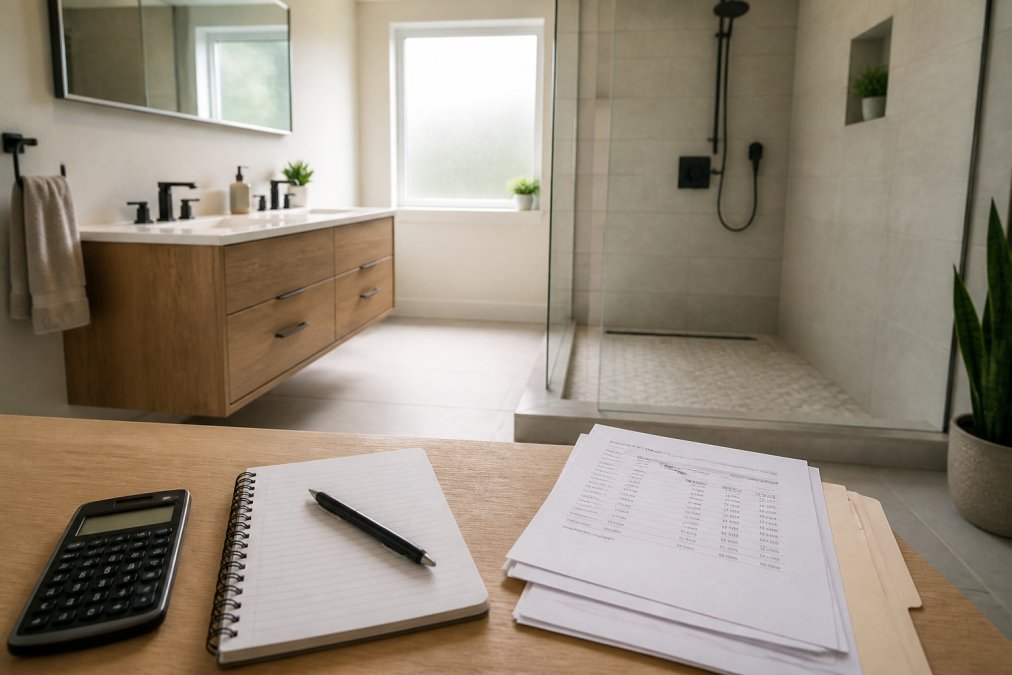
A bathroom renovation updates or replaces functional and aesthetic elements, from plumbing fixtures and tiling to electrical systems and cabinetry. The scope you choose determines the cost more than almost any other factor. According to the Canadian Home Builders’ Association renovation cost guidance, bathroom renovations consistently rank among the top five home improvement investments for resale value.
Refresh vs. Mid-Range vs. Full-Scale Renovation
The most useful mental model is to think in three tiers.
A refresh covers cosmetic updates: new fixtures, paint, lighting, a new vanity top, and re-grouting. No walls come down, no plumbing moves.
A mid-range remodel replaces the vanity, toilet, tub or shower surround, flooring, and lighting. Some plumbing may be repositioned. Tiling is typically involved.
A full-scale renovation means everything comes out: new layout, new plumbing rough-in, new electrical, waterproofing, custom tile, walk-in shower, and high-end fixtures.
| Renovation Tier | Scope | Typical Timeline |
|---|---|---|
| Refresh | Fixtures, paint, vanity top, lighting | 2-4 days |
| Mid-Range Remodel | Vanity, tub/shower, flooring, tiling | 7-10 days |
| Full-Scale Renovation | Full gut, layout change, custom finishes | 10-20 days |
Pricing depends heavily on your specific layout, material selections, and labor market. Contact Bathroom Renovators for a free quote tailored to your home.
Labor Costs vs. Material Costs: Where the Budget Goes
The biggest misconception is that materials are the expensive part. Labor is almost always the larger line item, typically accounting for 40 to 60 percent of the total project budget for a mid-range remodel, with materials making up the rest.
Demolition alone is underestimated. Tearing out old tiling, removing a cast iron tub, and hauling debris costs real money in both time and disposal fees. Skilled trades like licensed plumbers and electricians bill at their own rates on top of general contractor labor. Understanding this split helps you make smarter trade-offs: durable materials often save money on future repairs, while cutting corners on installation labor creates problems within a year.
Factors That Influence Your Bathroom Remodel Cost
Bathroom remodel cost is a product of at least five intersecting variables. Get one wrong in your planning and your budget will be off significantly.
Square Footage and Layout Complexity
Square footage matters, but layout complexity matters more. A small 4-square-metre powder room is straightforward. A 9-square-metre primary ensuite with a double vanity, freestanding tub, walk-in shower, heated floor, and separate water closet is entirely different.
Layout changes escalate costs fast. Moving a toilet even 300 millimetres requires repositioning the drain stack. Relocating a shower means new waterproofing, new rough-in plumbing, and potentially new electrical for ventilation. Every structural change adds subcontractor hours.
Plumbing, Electrical, and Waterproofing Scope
Plumbing and electrical work in bathrooms is regulated under the British Columbia Building Code, which sets minimum standards for drain sizing, ventilation, and GFCI protection. Permits are required for most work, and inspections must pass before walls close up.
Waterproofing deserves its own budget line. Proper waterproofing behind shower walls and under tile flooring separates a renovation lasting 15 years from one developing mold within three. It’s one area where cutting costs creates the most expensive long-term consequences.
Fixtures, Vanity, and Finish Level
Fixtures and vanity selection have the widest cost range of any single category. A builder-grade single vanity with a basic faucet sits at one end; a custom-built floating vanity with integrated lighting, undermount sinks, and designer hardware sits at the other.
Finish level cascades through every material decision: tile grade, grout type, shower hardware, towel bars, mirror style, and backsplash. Mid-range fixtures deliver excellent durability without premium markups. High-end finishes make sense for primary ensuites or when resale value is a priority.
Spend more on tile installation than on expensive tile. A skilled tiler working with mid-range porcelain outperforms a mediocre installer working with premium stone. The grout lines and layout pattern are what you see every day.
Small Bathroom Renovation Cost: What to Expect
Small bathroom renovation cost surprises people because savings from reduced square footage are smaller than expected. A 3-square-metre bathroom still requires the same licensed plumber, electrician, waterproofing materials, and demolition work as a larger space. Savings come primarily from reduced tile quantity and smaller vanity scale.
Layout optimization matters significantly in small bathrooms. Wall-hung vanities create visual floor space, niched shower shelving eliminates separate caddies, and larger-format floor tiles with minimal grout lines make the room read as bigger. A common mistake is over-tiling feature walls. In tight spaces, a single accent wall or simple subway tile pattern reads better than competing patterns on every surface.
Small bathrooms benefit most from a refresh-tier approach. If the layout is functional and plumbing is sound, updating the vanity, replacing the toilet, re-tiling the shower surround, and installing new flooring can transform the space without full gut renovation costs.
Hidden Costs: Permits, Contingencies, and Surprises
The number that breaks most renovation budgets is not on the initial quote. Hidden costs are predictable in aggregate, even if specific surprises are not. Plan for them from the start.
Permit and Inspection Fees
Permit and inspection fees are non-negotiable for most bathroom renovation scopes. Plumbing permits, electrical permits, and building permits are separate applications with separate fees, varying by municipality. Skipping permits creates liability when selling, voids insurance claims, and can require costly remediation if discovered. A reputable contractor pulls permits as standard practice.
Contingency Fund and Supply Chain Realities
A contingency fund of 10 to 15 percent of total budget is standard practice. Bathrooms in older homes frequently reveal surprises: water damage, outdated plumbing not meeting current code, inadequate subfloor structure, or mold requiring remediation.
Supply chain conditions have added uncertainty. Lead times on specific tile lines, fixtures, and vanity models have extended, and material prices have been less predictable. As noted in Statistics Canada’s construction materials price index, building material costs have seen sustained upward pressure. Ordering materials early and confirming availability before demolition begins is now standard practice.
Never start demolition before all materials are confirmed on-site or have a firm delivery date. A bathroom half-demolished while waiting for a backordered vanity is one of the most common and avoidable renovation delays.
DIY vs. Professional Labor: Real Cost Comparison
The DIY vs. professional labor question depends entirely on which tasks you’re comparing.
Painting, installing towel bars, swapping a faucet, or replacing a toilet seat are genuinely DIY-accessible. They require modest skill, carry limited risk, and save real money.
Plumbing rough-in, electrical work, waterproofing, and structural changes require licensed trades under provincial regulations. An improperly waterproofed shower causes mold and structural damage costing far more than professional installation. A plumbing error can go undetected for months before causing water damage.
| Task | DIY Feasibility | Risk if Done Incorrectly |
|---|---|---|
| Painting | High | Low |
| Faucet replacement | High | Low-Medium |
| Tile installation | Medium | Medium |
| Shower waterproofing | Low | High |
| Plumbing rough-in | Requires license | Very High |
| Electrical (GFCI, exhaust fan) | Requires license | Very High |
Tile installation is where homeowners most often overestimate DIY capability. Poor tiling work is expensive to correct because the substrate and waterproofing layer often need to come out with it.
Bathroom Renovation Timeline: What the Schedule Looks Like
A realistic timeline breaks down by phase.
Demolition: 1-2 days for most bathrooms.
Rough-in work: Plumbing and electrical rough-in typically takes 1-3 days. Inspections must pass before this phase closes.
Waterproofing and substrate: Waterproofing membranes require cure time before tiling begins.
Tiling: 2-4 days for a typical bathroom, including floor, shower walls, and backsplash. Grout requires additional cure time.
Fixture installation and finishing: Vanity, toilet, shower hardware, mirrors, and lighting typically take 1-2 days once tile is set and cured.
For a mid-range bathroom remodel with no structural surprises, a well-organized crew completes the project in 7 to 10 days. This timeline requires advance planning, confirmed material availability, and a contractor who coordinates subcontractors. Projects stretching to four or six weeks almost always trace back to poor scheduling, not project complexity.
Hiring a Bathroom Contractor: What to Look For
Hiring the right bathroom contractor is where most renovation decisions are won or lost. The quality of work is a direct function of who does it.
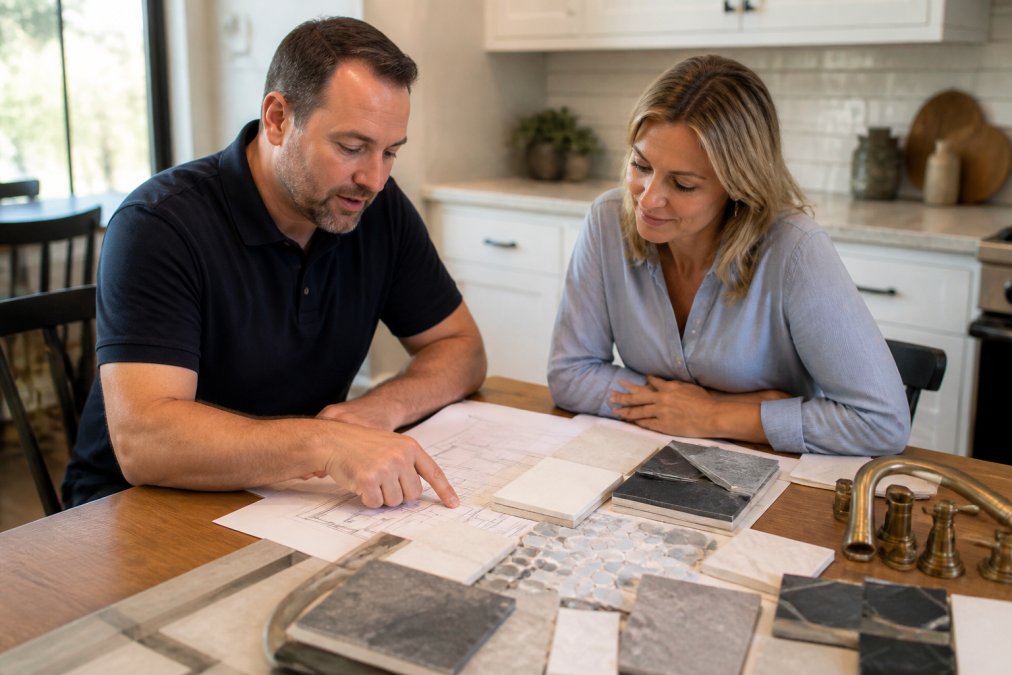
The first filter is licensing and insurance. In British Columbia, contractors performing plumbing and electrical work must hold appropriate provincial licenses. General contractors should carry liability insurance and WorkSafeBC coverage.
The second filter is references. Ask for specific recent references from work completed in the last one to two years. Contact those references directly: did the project finish on time, was the site kept clean, and did the contractor respond when something needed addressing after completion?
The third filter is communication clarity. A contractor giving a detailed written quote, explaining what’s included and what could change, and answering questions directly shows how the project will run. Vague quotes and evasive answers about permits are red flags.
A free quote from a reputable contractor should include a scope of work, material allowances, a payment schedule, and a clear explanation of what triggers additional costs. If a quote is just a single number with no breakdown, ask for more detail before comparing it to others.
According to the Homeowner Protection Office of BC, homeowners have specific rights and protections when working with licensed residential builders, including recourse options if work is not completed to code. A crew that leaves dust, debris, and materials in your home at the end of each day signals disrespect for your space and how the rest of the project will go.
Bathroom renovations involve real variables, real trades, and real consequences when something goes wrong. The Bathroom Renovators team offers free consultations to walk through your space, identify potential complications before they become surprises, and give you an honest assessment of scope and timeline. With over 26 years of experience, a 7-10 day project completion standard, and a 1-year warranty on all work, we’re built for homeowners who want it done right the first time. Get your free consultation and find out exactly what your bathroom remodel will take.
Frequently Asked Questions
How much does a bathroom renovation cost in the Lower Mainland?
Bathroom remodel cost in the Lower Mainland varies significantly based on scope, materials, and whether plumbing or electrical work is involved. A basic refresh typically costs less than a full gut-and-rebuild. Because labor rates and material prices in Metro Vancouver tend to run higher than national averages, it is worth getting a detailed quote specific to your project rather than relying on broad national figures. A free consultation with a local contractor gives you the most accurate estimate.
What is the biggest expense in a bathroom remodel?
Labor consistently accounts for the largest share of bathroom remodel cost, often representing 40-50% of the total budget. Plumbing and electrical subcontractors are especially significant when you are moving fixtures or upgrading wiring. After labor, tiling, flooring, and the vanity or bathtub replacement tend to be the next largest line items. Choosing mid-range fixtures over high-end ones is usually the fastest way to bring the overall budget down without compromising durability.
How long does a typical bathroom renovation take?
A standard bathroom renovation timeline runs anywhere from one week to four weeks depending on scope. A straightforward refresh, new fixtures, tiling, and vanity with no layout changes, can be completed in 7-10 days by an experienced team. Full-scale renovations involving demolition, plumbing relocation, waterproofing, and custom tiling take longer. Delays from permit approvals or supply chain backorders can also extend the schedule, so confirming material availability before work begins keeps the timeline on track.
Can I renovate my bathroom for $10,000?
A $10,000 budget is realistic for a focused mid-range refresh in a standard-sized bathroom, covering a new vanity, toilet, tiling, lighting, and updated fixtures without moving plumbing. In the Lower Mainland, where labor and material costs are higher than the national average, that budget gets stretched quickly if structural issues, waterproofing problems, or electrical upgrades are discovered. Getting a detailed quote before committing is the best way to confirm what your specific bathroom remodel cost will include at that budget level.
This article was written using GrandRanker
